Agri-Tourism & B&B Zoning in BC & Cariboo
Real Estate, Agri-Tourism, Bed & Breakfast, Zoning, Licensing
Agri‑Tourism and Bed & Breakfast Properties in BC and the Cariboo: Zoning and Licensing Basics
A practical guide to zoning, licensing, and approvals for agri‑tourism farms in BC and bed & breakfast properties in the Cariboo Regional District.
Direct Answer: Zoning and Licensing Basics You Need to Know
In British Columbia, agri‑tourism uses and bed & breakfast (B&B) operations are not automatically permitted just because a property is rural or in active farm use. They typically require:
Correct zoning that explicitly allows agri‑tourism or B&B / tourist accommodation; and
Business licensing or registration from the relevant municipality or the Cariboo Regional District (CRD), where such licensing is in place.
For agri‑tourism property in BC, provincial rules under the Agricultural Land Reserve (ALR) Use Regulation set a baseline (for example, up to 10 sleeping units and less than 5% of the parcel developed for accommodation), but local zoning can be more restrictive or may not allow accommodation at all (bclaws.gov.bc.ca; alc.gov.bc.ca).
For bed and breakfast zoning in the Cariboo, CRD bylaws generally allow B&Bs only as a small‑scale, ancillary use within a principal residence, often limited to about four guest rooms and eight adult guests, and operated by the owner or primary resident (cariboord.ca).
📌 Key Point: Both agri‑tourism and B&B use usually require specific zoning plus, where applicable, a business licence or provincial short‑term rental registration. Always confirm the latest rules with the Cariboo Regional District or municipality before you publish a listing, market a property, or open for guests.
Agri‑Tourism Property in BC: How Zoning and the ALR Work Together
Many BC farms sit within the Agricultural Land Reserve (ALR). The provincial ALR Use Regulation recognizes some agri‑tourism activities as “farm use” when they are clearly tied to agriculture and do not rely on permanent public facilities. Examples include:
Farm tours, U‑pick operations, and educational demonstrations
Seasonal events such as corn mazes or heritage exhibits
Livestock promotion days and tractor rides
Agri‑tourism accommodation on ALR land is more tightly controlled. Provincial rules currently allow short‑term or seasonal accommodation if:
The land is farm‑classified under the Assessment Act;
The total developed area for accommodation stays under 5% of the parcel;
There are no more than 10 sleeping units in total; and
Stays remain short‑term or seasonal, not full‑time residential.
Crucially, the Agricultural Land Commission (ALC) stresses that local governments can still restrict or prohibit agri‑tourism accommodation by not listing it as a permitted use in their zoning bylaws. If your proposal exceeds provincial thresholds or local limits, you may need a non‑farm use application to the ALC, and possibly a rezoning or Temporary Use Permit from your local government (alc.gov.bc.ca).
💡 Pro Tip: Treat provincial ALR rules as the starting point, not a guarantee. Your local zoning bylaw ultimately determines whether agri‑tourism accommodation is allowed on a specific parcel.
Bed & Breakfast Zoning in the Cariboo Regional District
Within the Cariboo Regional District, B&Bs are regulated through several zoning and rural land‑use bylaws, including the Central Cariboo Rural Land Use Bylaw No. 3503 and the South Cariboo Area Zoning Bylaw No. 3501 (cariboord.ca). While details vary by zone, typical conditions for a permitted bed and breakfast use include:
The B&B is entirely within the principal dwelling (no separate guest houses unless specifically zoned for that use).
It is operated by the owner or primary resident of that dwelling, aligning with BC’s principal‑residence focus for short‑term rentals.
A maximum of about four guest rooms and up to eight adult guests, keeping the use clearly “small‑scale” and ancillary (cariboord.ca).
Minimal exterior evidence of the business, often limited to one small, unlit sign.
On top of zoning, BC’s provincial short‑term rental rules now require most hosts to:
Meet the principal residence requirement (you live there most of the year); and
Register with the Province as a short‑term rental host and, where a local business licence is required, provide that licence number in your registration and listings (www2.gov.bc.ca).
As of the latest available information, the Cariboo Regional District has not fully rolled out a dedicated business licence system for B&Bs or short‑term rentals, but it now has the authority to do so and has considered licensing as a future tool (pub-crd.escribemeetings.com). Municipalities within or near the Cariboo (for example, Williams Lake or Quesnel) may have their own licensing requirements.

Successful Cariboo B&Bs blend home‑based hospitality with strict zoning and safety compliance.
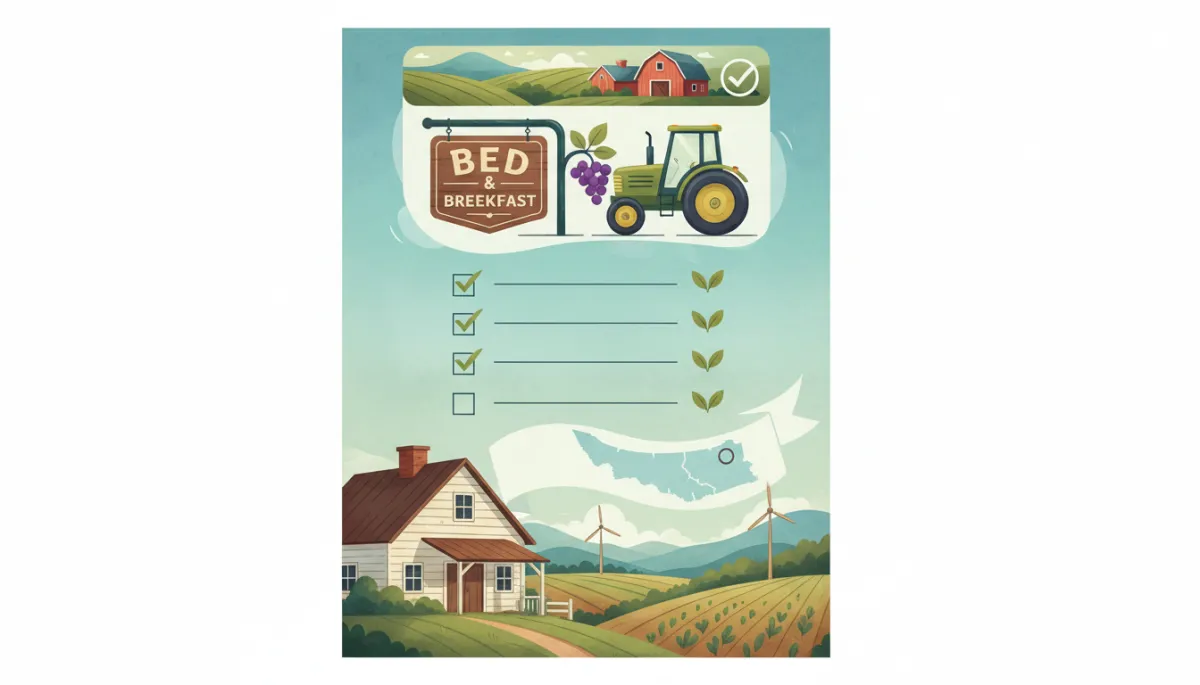
Checklist: Typical Approvals for Agri‑Tourism and B&B Use
Every property is different, but the following checklist captures the approvals and confirmations typically needed before you launch or advertise an agri‑tourism or B&B operation in BC, and especially in the Cariboo:
Confirm zoning and land‑use designation
Check which zoning or rural land‑use bylaw applies (e.g., CRD Bylaws 3501, 3502, or 3503) and verify that agri‑tourism, tourist accommodation, or bed and breakfast is listed as a permitted use for your zone.ALR status and farm classification (for agri‑tourism)
If the property is in the ALR, confirm farm classification and review ALR Use Regulation and ALC bulletins on agri‑tourism and tourist accommodation to ensure your proposal fits within provincial limits.Rezoning or Temporary Use Permit (if needed)
If your current zoning does not allow the intended use—or only allows a smaller scale than you plan—discuss rezoning or a Temporary Use Permit with CRD or municipal planning staff.Building permits / Change of use
Any interior renovations, added guest suites, or change from purely residential use may trigger building permits or a formal change‑of‑use review to ensure compliance with the BC Building Code and life‑safety standards (egress, alarms, fire separation, parking layout).Health, fire, and safety approvals
Depending on guest numbers and services (e.g., meals), Interior Health and local fire services may require inspections or approvals for water, wastewater, food handling, and fire safety systems.Business licence or registration
Where a Cariboo Regional District or municipal business licence is required for B&Bs or tourist accommodation, apply and obtain your licence. In all cases, complete the provincial short‑term rental registration if your operation meets the definition of an STR.Tax and insurance setup
Speak with your accountant and insurer about PST, GST, MRDT (where applicable), and appropriate commercial or farm‑stay insurance coverage for guest activities on the property.Neighbour and covenant review
Review any covenants or strata rules that may limit commercial or tourist use, and consider proactive communication with neighbours to reduce future complaints or enforcement risk.
Why Verifying Current Requirements Matters Before You Publish
Zoning and licensing rules across BC—and in the Cariboo in particular—are evolving. The CRD continues to update zoning bylaws and consider new tools, such as business licensing, to manage short‑term rentals and B&Bs (pub-crd.escribemeetings.com). Provincial short‑term rental legislation is also relatively new and may be refined over time.
If you are a property owner, buyer, or content publisher writing about a specific agri‑tourism or B&B opportunity, you should:
Contact the Cariboo Regional District Planning and Building Departments, or the relevant municipality, to confirm the latest zoning permissions and any new licensing bylaws in force.
Check the BC Government short‑term rental portal for current registration requirements and definitions.
Confirm that any statements in your marketing or blog content about “permitted” uses remain accurate as of the publication date.
⚠️ Important: Before you publish content promoting an agri‑tourism or B&B property in the Cariboo or elsewhere in BC, verify all zoning and licensing details with the Cariboo Regional District or local municipality and the Province of BC. Requirements can change, and relying on outdated information can create compliance issues for you and your audience.