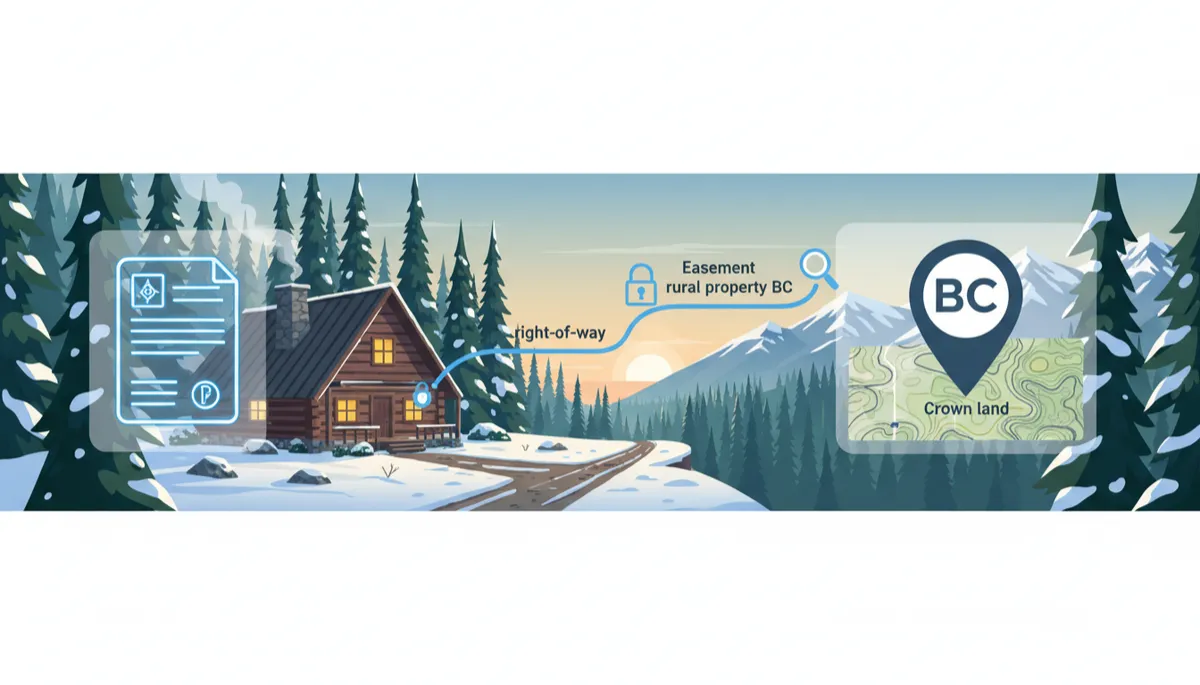
BC Rural Property: Crown Land & Road Access Tips
BC Acreage, Rural Cabins, Crown Land, Road Access
Crown Land, Easements & Road Access: What BC Rural Buyers Should Check
Thinking about a Bridge Lake acreage, an off‑grid cabin, or a tucked‑away homestead in BC? Before you fall in love with the view, make sure you understand Crown land, easements, and road access so your dream property doesn’t come with costly surprises.
Why Access Matters More Than the View
In our Bridge Lake Acreage and Off‑Grid Cabin posts, we talked about power, water, and septic. Just as important is how you actually get to the property. In rural BC, road access, Crown land next door, and easements on title can affect everything from financing and insurance to winter livability and resale value. A proper land title search BC and early due diligence are essential parts of any serious offer.
Public vs. Private Road Access
When buyers ask about road access rural property BC, they usually mean, “Can I reliably get in and out year‑round?” The answer starts with whether you have public or private access:
Public (Crown or municipal) road: Typically a dedicated public road or highway maintained by the Ministry of Transportation or a local government. This is what most lenders and insurers want to see. It doesn’t mean it’s always plowed instantly, but it is on an official maintenance schedule.
Private road or driveway: Access may cross one or more private parcels, forest tenure, or Crown land. You might rely on an easement, licence, or informal arrangement. Maintenance and snow clearing are usually the responsibility of the benefiting owners, not the province.
Private access isn’t necessarily a problem, especially for off‑grid cabin buyers who value privacy. But you must confirm that a legal right of access exists and that it is properly documented. “We’ve always driven in this way” is not enough if a neighbour sells, fences, or changes their mind.
Easements & Rights‑of‑Way on Title: Read the Fine Print
An easement rural property BC is a legal right for one property (the “dominant tenement”) to use another property (the “servient tenement”) for a specific purpose, such as road access or utilities. A right‑of‑way is a type of easement often used for roads, driveways, or utility corridors. In BC, these are governed by the Land Title Act and Property Law Act and are usually registered on title through the Land Title and Survey Authority (LTSA).
When you order a land title search BC, you’ll see registered charges, including easements and rights‑of‑way. Do not skip reading them. Key questions include:
Does the easement clearly grant vehicular access, or is it limited to foot traffic or utilities?
Who is responsible for construction, repair, and maintenance? Some agreements spell out cost‑sharing; others are silent, which can lead to disputes later.
Are there width limits that might affect future plans (for example, widening the driveway or bringing in building materials)?
A proper review of easements and rights‑of‑way on title can reveal whether your access is secure, conditional, or missing altogether. This is where a rural‑savvy lawyer or notary earns their fee.
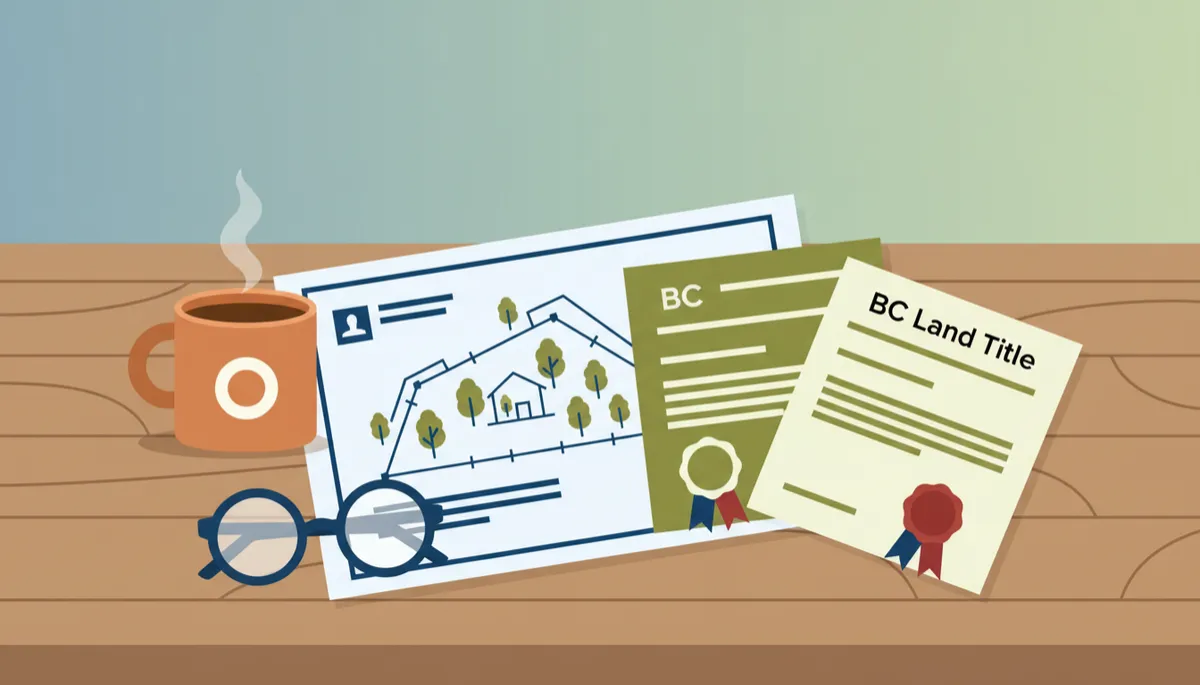
Careful review of easements and access rights can prevent costly disputes after you move in.
Neighbouring Crown Land: Pros and Cons for Buyers
Many Bridge Lake and off‑grid cabin buyers love backing onto Crown land. Under BC’s Land Act, most of the province is provincial Crown land, managed by the Ministry and used for forestry, recreation, grazing, and other tenures. Having Crown land next door can be a major advantage, but it’s not risk‑free.
Pros: Extra privacy, more room to roam, and fewer immediate neighbours. You may enjoy trails, lakes, and views that feel like an extension of your own property, without paying taxes on those extra acres.
Cons: Crown land can be re‑allocated, logged, or used for other purposes through leases, licences, or rights‑of‑way. You do not control it. Future forestry, road building, or recreation sites could change the character of the area. Certain uses may require permits or authorizations from the province.
Before you commit, it’s wise to check provincial mapping tools and speak with FrontCounter BC or a professional about existing tenures and planned uses on nearby Crown parcels. What feels like wilderness today may look different in ten years.
Who Maintains the Road in Winter?
Winter access is one of the most common pain points for rural owners in BC. Even if you’re comfortable with seasonal or off‑grid living, you should know exactly who is responsible for snow clearing and maintenance on the access route you’ll use every day.
Public roads: Maintained under contract by the Ministry of Transportation or the local government. Plowing frequency depends on the road’s priority classification. Ask neighbours how quickly plows usually arrive during storms.
Private access roads: Maintenance is typically shared among the owners who benefit from the road, sometimes through a formal road maintenance agreement registered on title. In other cases, one neighbour has historically done the work, which can change overnight when properties sell.
For off‑grid cabin buyers, winter access might be by snowmobile only. That can be part of the adventure, but it needs to be an informed choice not a surprise after your first heavy snowfall.
💡 Quick explainer to prevent costly surprises: Always confirm in writing who maintains each segment of road you rely on, how costs are shared, and whether there is a legally binding agreement. Verbal understandings and “we’ll figure it out” are red flags when you’re investing hundreds of thousands of dollars in a rural property.
What to Check Before Subject Removal
If you’re writing an offer with conditions, build in time to investigate access and Crown land issues thoroughly. Before removing subjects on a BC acreage or cabin, make sure you have:
A current land title search BC for the subject property and, if necessary, any neighbouring parcels that your access crosses.
Copies of all easements, rights‑of‑way, and covenants affecting access, reviewed with your legal professional.
Confirmation from the local government and Ministry of Transportation about road status (public vs. private) and maintenance responsibilities.
On‑the‑ground verification that the physical road you plan to use matches the legal description in the easement or plan of subdivision.
Basic research on neighbouring Crown land tenures and potential future uses, especially if your enjoyment depends on the surrounding forest staying quiet and natural.
These checks apply whether you’re buying a year‑round home, a Bridge Lake recreational acreage, or a remote off‑grid cabin that you visit a few times a year. The more remote the property, the more critical it is to do this homework before you waive conditions.
Why a Consultation Is Worth It for Rural Buyers
Rural purchases in BC are different from city condos or suburban homes. Between Crown land regulations, forestry tenures, easements, and the realities of winter access, there is more that can go wrong—and more that can be planned for with the right advice. A quick online search for road access rural property BC or easement rural property BC will show you how often buyers run into issues they didn’t anticipate.
Before you commit to that dream lakeshore or off‑grid escape, take the time to book a consultation with professionals who understand rural and recreational properties: a knowledgeable real estate agent, lawyer or notary, and, where appropriate, a land surveyor. They can help you interpret title documents, confirm legal access, and flag any Crown land or tenure issues that might affect your long‑term plans.
With the right team and a careful review of access, easements, and Crown land, you can move forward with confidence knowing that your BC acreage or cabin is not just beautiful, but also practical, legal, and ready for years of enjoyment in every season.