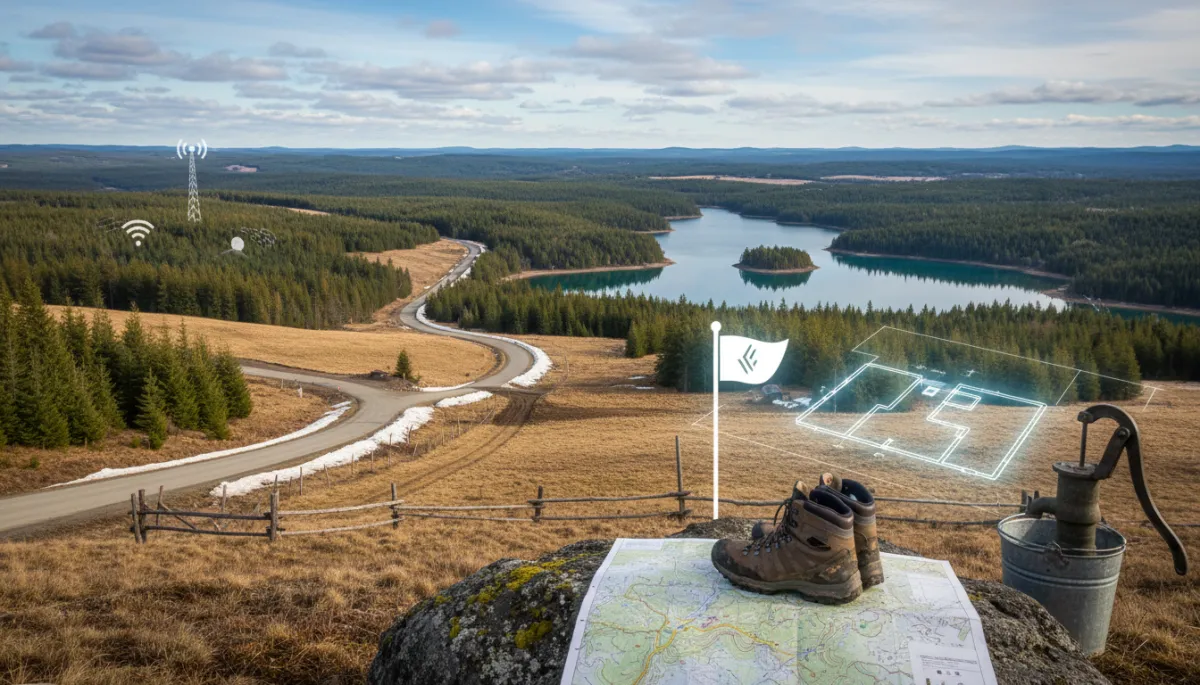
Bridge Lake Acreage: Land, Wells & Access Guide
Bridge Lake, Acreage Buying Guide
Bridge Lake Acreage: How to Evaluate Land, Wells & Access
If you dream of space, privacy, and a future cabin or full-time home in the South Cariboo, Bridge Lake acreages deserve a close look. This guide walks you through how to evaluate land, wells, road access, and services around Bridge Lake so you can buy with confidence and know what questions to ask before you write an offer.
What “Acreage” Looks Like Around Bridge Lake
Around Bridge Lake, “acreage” can mean very different things from one property to the next. You will see everything from gently rolling 2–5 acre parcels with a cleared building site and driveway, to 20+ acre backroad properties with dense timber, wetlands, and rocky knolls. Some parcels are lakefront or across the road from the water; others are set back in the hills with peekaboo views and big-sky sunsets rather than shoreline access.
Typical Bridge Lake acreages include a mix of mature spruce and fir, open pasture or natural meadow, and sections of thicker bush. Elevation changes are common, so a “10 acre” parcel might only have a few acres that are truly easy to build on. When you tour land, pay attention to:
Usable vs. total acres: How much is level or gently sloping, and how much is steep, wet, or rocky?
Existing improvements: Driveways, cleared sites, older cabins, sheds, or power poles all add value and reduce your development costs.
Orientation and exposure: South-facing benches are prized for light, gardening, and solar potential, while low-lying north slopes can hold snow and moisture longer into spring.
The local market is driven by buyers seeking recreation, retirement, and future full-time living. That means privacy, quiet, and a feeling of “being away” are just as important as square footage. To get a sense of what is currently available and recent sale prices, ask for a curated list of Bridge Lake acreages that match your size, budget, and access preferences.
Wells, Flow Tests & Water Quality: What to Look For
Reliable water is one of the most important pieces of any rural purchase. Around Bridge Lake, most acreages rely on private drilled wells. A few older cabins still use shallow wells or lake-intake systems, but for a modern year-round home, a properly constructed drilled well is the standard.
When you are evaluating a property with an existing well, ask for any drilling records, past flow tests, and water quality reports. A flow test measures how many gallons per minute (GPM) the well can reliably produce over time. For typical residential use, many buyers aim for at least 3–5 GPM, though storage tanks and smart pumping systems can make lower yields workable in some situations. A professional well contractor or inspector can run a current flow test as a condition of your offer if recent data is not available.
Water quality is equally critical. Provincial lake monitoring shows Bridge Lake itself is oligotrophic—clear, low in nutrients, and generally high quality surface water, with a recent Trophic State Index around 36 and good clarity and low algal levels. That is reassuring for the overall environment, but does not replace testing your own well. Groundwater chemistry can be very different from surface water, even just a short distance away. For example, a public well at Bridge Lake Park was decommissioned due to arsenic concerns, and no longer supplies drinking water. That history is a reminder that private wells should be tested for:
Basic potability (bacteria such as coliform and E. coli)
Minerals and metals (including arsenic, manganese, iron, hardness)
Aesthetic issues (smell, taste, staining potential)
If there is no existing well, budget for drilling and ask nearby owners about their depths and yields. A local realtor who works Bridge Lake regularly can often share practical insight about which ridges, benches, or valleys tend to have better groundwater, and how that might affect your risk and costs.
Road Access, Easements & Winter Plowing
It is easy to fall in love with a sunny meadow or quiet forest, only to discover later that winter access is a challenge. Around Bridge Lake, some acreages sit on paved or well-maintained public roads; others are reached by gravel, forestry-style, or private strata roads that can change character dramatically between July and January.
Start by confirming whether access is via a public road or a registered easement over a neighbour’s land. Your realtor and lawyer will review the title to identify any rights-of-way, shared driveways, or easements for utilities. Clarify:
Who is responsible for road maintenance and gravel?
Is there a formal road users’ agreement or just an informal neighbourly arrangement?
Are there steep sections, tight switchbacks, or low-lying areas that flood or turn to mud in shoulder seasons?
Winter plowing is a big consideration if you plan to live here year-round or visit often. Some public roads are plowed by the province, while smaller side roads and private lanes depend on private contractors or shared arrangements between neighbours. When you tour in summer, ask specifically:
How soon after a storm is the road typically cleared?
What type of vehicle do locals use in winter half-ton truck with good tires, or is a 4x4 with chains the norm?
Are there any sections that drift in with snow or become icy and shaded?

Year-round comfort depends on reliable access, winter plowing, and clear easements.
Zoning & Building: Always Check with the Regional District
Before you fall too hard for a property, confirm that you can actually build what you have in mind. Bridge Lake sits within the Cariboo Regional District’s South Cariboo planning area. Zoning is set out in the South Cariboo Area Zoning Bylaw (Bylaw 3501), and long-term policy is guided by the Interlakes Official Community Plan. There are ongoing amendments from time to time, but unless a specific rezoning has been adopted for your parcel, Bylaw 3501 is the main reference for what is currently permitted.
Zoning will dictate minimum lot size, whether you can build a single-family home, secondary dwelling, or suite, and where you can place outbuildings, shops, or guest cabins. It also covers setbacks from property lines and the lake, height limits, and sometimes restrictions on certain commercial or agricultural uses. If you plan to run a small business, keep animals, or build a larger shop, it is essential to verify that your intended use fits the current zoning and any relevant policies in the Interlakes OCP.
The safest approach is to contact the Cariboo Regional District planning department directly with the parcel’s legal description or PID and ask them to confirm:
Current zoning designation and permitted uses
Any development permit areas, lakeshore regulations, or special setbacks that apply
Whether any zoning amendments are proposed that could affect future use or density
Your builder or designer can then work with those rules to create a realistic site plan. A local realtor can help you interpret the bylaws in plain language and flag potential red flags early, before you spend money on plans or surveys.
Hydro, Internet & Cell Coverage: Modern Comfort in a Rural Setting
Many Bridge Lake acreages already have hydro at or near the lot line, especially along established roads. Where power is not yet on site, BC Hydro can usually extend service, but the cost will depend on distance, terrain, and whether new poles or transformers are required. When you view a property, look for nearby power lines and ask your realtor to confirm the status with Hydro and obtain a rough estimate for connection if needed.
Reliable internet has become just as important as power for many buyers, especially those planning to work remotely. Traditional rural internet options in the area have included fixed wireless and satellite, but newer satellite systems have changed what is possible. Be sure to review the dedicated Starlink post for up-to-date details on installation, speeds, and real-world performance around Bridge Lake, and how it compares with other providers in the region.
Cell coverage is another key piece of the puzzle. Signal strength can vary dramatically between the lakeshore, higher benches, and sheltered valleys. Before you buy, check the Cell Coverage post that maps the main carriers’ reception around Bridge Lake and the backroads. When you are physically on site, test calls, texts, and data from your own phone in several spots on the property particularly where you might build or park an RV while you plan your home.
For a broader sense of local services, events, and amenities, spend some time on the Bridge Lake community page. It is a great way to understand what life is like beyond your driveway: community groups, nearby shops and fuel, boat launches, and seasonal activities that make the area special.
A Practical Land-Walk Checklist from a Backroads Realtor
Walking an acreage properly takes time and a bit of strategy. Here is a practical checklist, based on how a realtor who knows the Bridge Lake backroads will typically tour land with serious buyers:
Start with the map: Review the lot shape, boundaries, and topography before you set out. Note access points, potential building benches, and any creeks or wetlands.
Drive the approach slowly: Pay attention to road width, sightlines, soft shoulders, and any low spots that might flood or rut out. Imagine this drive in a snowstorm or during spring melt.
Stand where you might build: From likely building sites, look and listen. Can you hear the highway, boats, or neighbouring generators? What do you see in each direction? How does the sun move across the property?
Check drainage and soil: Look for damp ground, cattails, or moss that suggest seasonal wet areas. Kick at the soil—are you hitting rock right away, or is there decent depth for septic and landscaping?
Locate services: Find any existing wellheads, hydro poles, power meters, or old septic systems. Take photos and note their condition and distance from your preferred build site.
Walk the boundaries: Use flagging, an app, or a GPS map to stay roughly on the lot lines. Watch for old fences, survey pins, or encroachments like neighbouring sheds or driveways that might cross onto the land.
Note fire-smart potential: Consider how easily you could thin trees and limb branches near a future home to create defensible space, while keeping privacy and shade where you want it.
Test connectivity: Try your cell phone and, if possible, a portable hotspot from a vehicle. This gives you a baseline before you explore options like Starlink or other rural internet solutions.
Ask “what’s over the hill?”: A local realtor who knows the backroads will often point out nearby gravel pits, planned subdivisions, or quiet crown land that does not show up in a quick online search but can affect your long-term enjoyment.
Next Steps: Get a List of Bridge Lake Acreages or Book a Land Tour
Buying acreage is about more than a price per acre. It is about how the land feels under your boots, whether the access and services fit your lifestyle, and how easily you can turn a raw parcel into the retreat or full-time home you have in mind. Around Bridge Lake, those details matter and having someone who knows the area’s roads, wells, and zoning rules can save you costly surprises later.
If you are starting to explore, request a tailored list of current Bridge Lake acreages that match your wish list for size, budget, lake proximity, and level of development. When you are ready to get serious, book a guided land tour with a realtor who knows the backroads. Together, you can walk the properties, talk through wells, access, zoning, hydro, internet, and cell options, and decide which parcels truly fit the way you want to live.