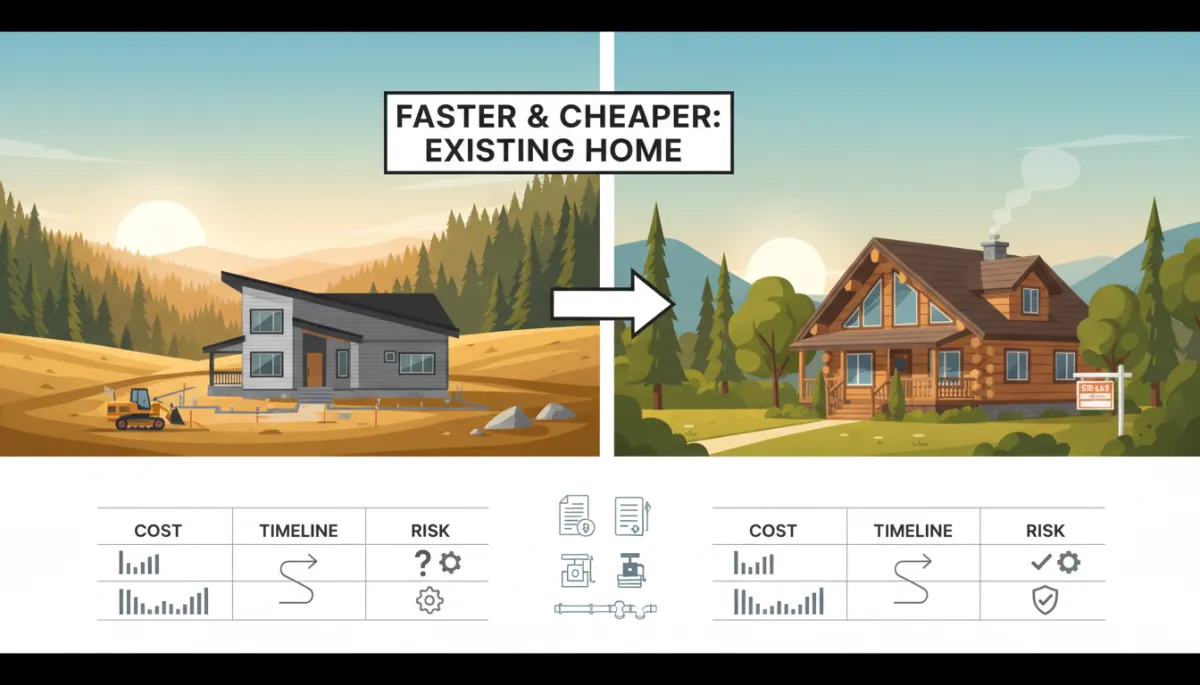
Build or Buy in South Cariboo: Cost & Time Guide
Real Estate, South Cariboo, Building vs Buying
Buying Land to Build vs Buying an Existing Home in South Cariboo: What’s Really Faster and Cheaper?
Thinking about moving to the South Cariboo and torn between buying a piece of land to build your dream home or purchasing an existing house? This guide walks you through real‑world costs, timelines, and risks, with a clear answer up front so you can plan with confidence.
Quick Answer: Which Is Faster and Cheaper in South Cariboo?
If your top priorities are speed and keeping total costs down, buying an existing home in the South Cariboo is generally both faster and cheaper than buying land and building from scratch.
Building can deliver a home tailored exactly to you, but once you factor in land, construction at roughly $250–$450 per sq ft (with mid‑range builds around $350/sq ft), plus well, septic, site prep, permits, and a contingency, total project costs often approach or exceed comparable resale prices. Timelines also stretch from months into a year or more, compared with 30–90 days for a typical resale purchase.
Side‑by‑Side Comparison: Land + Build vs Existing Home
Factor Buy Land & Build (South Cariboo) Buy Existing Home (South Cariboo) Total Cost (typical 2,000 sq ft) Land: ~$200k–$300k for 2–3 acres near amenities; Build: ~$850k–$1M+ including permits, well, septic, contingency. All‑in: often $1M–$1.3M+. Existing 2–3 bed homes on acreage in the 100 Mile House / Horse Lake area often list well below typical full build costs, depending on age and condition. All‑in: commonly lower than new build. Up‑Front Cash Needed Land down payment + design + permits + early site work before construction financing fully advances. Cash flow is staged and can be heavy early on. Standard down payment + closing costs. Predictable and typically lower up‑front than land + build. Timeline to Move‑In 12–24 months is common: land search, due diligence, design, Cariboo Regional District (CRD) permits, well/septic, and full build. 30–90 days from accepted offer to possession in many cases, sometimes longer if you include house‑hunting time. Cost Predictability Moderate to high risk of overruns due to material prices, labour, site surprises (rock, groundwater), and design changes. High predictability. Purchase price is known; renovation costs can be budgeted separately. Regulatory / Permitting Risk Must navigate CRD building permit process, potential development permits, inspections, and timelines. Higher regulatory complexity. Existing homes already permitted and inspected. Risk mainly in condition, not permits. Lower regulatory risk. Customization & Energy Efficiency Maximum customization; can design layout, finishes, and high‑efficiency systems to current BC energy step‑code standards. Limited to renovations and upgrades; may need retrofits for energy performance or layout changes. Overall Risk Level Higher risk: budget creep, delays, contractor availability, and unknowns with well/septic and soil conditions. Moderate risk: home inspections, aging systems, and future maintenance, but fewer unknowns than a new build.
Understanding South Cariboo Land Prices in 2026
Your build‑vs‑buy decision starts with realistic land costs. In the South Cariboo, especially around 100 Mile House and Horse Lake, 2026 listings show a wide range depending on size and proximity to amenities:
A nearly 3‑acre undeveloped parcel east of 100 Mile House is listed around $195,000 (~$65,400/acre). (Source: Coldwell Banker, 2026 listing data.)
A 1.53‑acre lot in the Horse Lake area is listed at about $160,000, or roughly $104,600/acre. (Source: farmsforsaleinbc.ca.)
Large ranch properties, such as a 161‑acre ranch near 100 Mile House at about $1.33M, work out to roughly $8,260/acre, much cheaper per acre but far more land than most homebuyers need. (Source: rew.ca.)
In practice, buyers looking for a small rural residential lot of 1–3 acres near services can expect to pay somewhere in the $65,000–$105,000 per acre range. That means a 2–3 acre “buildable” lot in a desirable spot often lands in the $200,000–$300,000 bracket before you spend a dollar on design or construction.
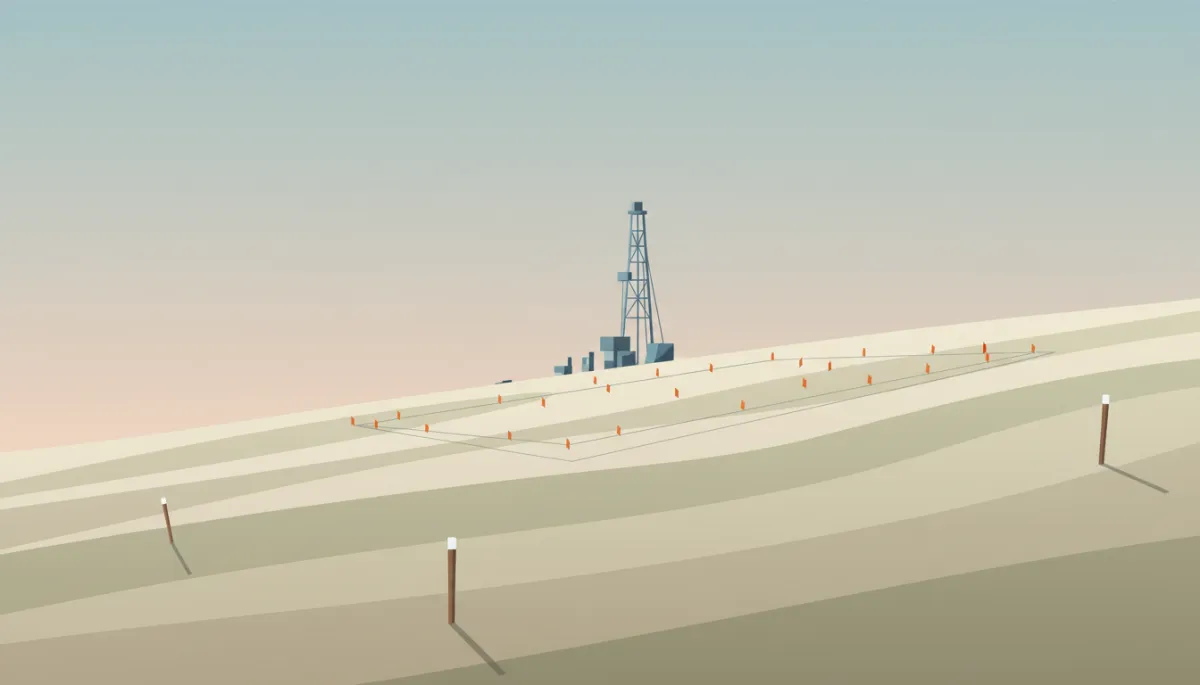
Servicing raw land with well, septic, and site prep can add tens of thousands to your build.
What It Really Costs to Build a Home in South Cariboo
Construction costs in the South Cariboo sit in the mid‑to‑lower range for B.C., but “rural” does not mean “cheap.” Based on recent B.C. and interior benchmarks, here is what you should plan for in 2026:
Hard construction cost: roughly $250–$450 per sq ft, with a realistic mid‑range estimate around $350/sq ft for a custom home, depending on design and finishes. (Sources: lukewalkerrealty.ca, corevalhomes.com, wealthnorth.ca.)
Soft costs: design, engineering, permits, and professional fees often add 10–20% of hard construction costs, or roughly $20–$60 per sq ft.
Servicing and site prep: well drilling, septic system, driveway, tree clearing, and grading can add $30,000–$80,000+ depending on the site.
For a 2,000 sq ft home, a mid‑range example might look like this:
Component Estimated Cost (2,000 sq ft example) Hard construction (~$350/sq ft) ~$700,000 Servicing & site prep (well, septic, driveway, grading) ~$30,000–$80,000+ Permits, design & engineering (≈15%) ~$105,000 Contingency (≈15% of hard costs) ~$105,000 Estimated total build cost (excluding land)≈$940,000–$990,000 (often $850,000+ even in lean scenarios)
Once you add a typical 2–3 acre lot at $200,000–$300,000, your all‑in cost to own a new home in the South Cariboo often sits around or above the million‑dollar mark. That’s why, from a pure dollars‑and‑cents standpoint, existing homes frequently come out cheaper.
Don’t Forget the “Hidden” Build Costs: Well, Septic, and Site Work
In the South Cariboo, many rural properties are not connected to municipal water or sewer. That means your build budget must include:
Well drilling and water system: Depending on depth, geology, and yield, drilling and equipping a well (pump, pressure tank, trenching to the house) can easily run into the tens of thousands of dollars. Shallow, high‑yield wells may cost less; deep or low‑yield wells can cost significantly more, and sometimes multiple test holes are required.
Septic system: A properly designed and installed septic system for a single‑family home, including tank, field, and engineering, is another major line item. For budgeting, many owners set aside a five‑figure allowance within the $30,000–$80,000 servicing range noted above, depending on soil conditions and system type.
Access and grading: Clearing trees, roughing in and gravelling a driveway, and creating a level building pad can add substantial cost, especially on sloped or heavily treed sites.
💡 Budget Tip: When comparing “build vs buy,” make sure your build spreadsheet has separate lines for well, septic, and site prep. These are not optional extras; they are essential services that can materially change your total project cost.
The Cariboo Regional District Building Permit Process: What Builders Must Navigate
Any new home within the Cariboo Regional District’s building inspection service areas (including the South Cariboo) must go through the CRD building permit process before construction begins. This is a key part of both your timeline and your budget.
When You Need a Permit
According to the CRD, a building permit is required for most substantial work, including:
New buildings or additions, including single‑family homes and manufactured homes
Detached garages, carports, and larger ancillary buildings
Covered or elevated decks, structural alterations, and changes in building use
Some small outbuildings and minor repairs are exempt, but a full home build is not. (Source: cariboord.ca, Building Permits & Inspections.)
Application Steps and Timelines
To apply, you submit a completed building permit application (the CRD form was updated July 10, 2025) along with:
Legal property description and civic address (through the CRD’s CityView portal)
Project details and estimated construction value
Site plan showing setbacks, any water features, existing structures, covenants, and easements
Building drawings (floor plans, elevations, sections, foundation details)
Proof of New Home Registration with BC Housing (Home Warranty Insurance)
The CRD reviews your application for zoning compliance, BC Building Code requirements, and whether any development permits or variances are needed. Only once the permit is issued can you legally start construction. The CRD notes that, once a complete application is received, processing typically takes under 20 business days (about four weeks), but this can vary with season and project complexity. (Source: cariboord.ca, Building Permits.)
Permit Fees and How They Affect Your Budget
Building permit fees in the Cariboo Regional District are based on the project’s valuation, with a structure such as:
$200 non‑refundable application fee, even if the total permit fee is lower
For typical residential builds, fees start at $200 for the first $1,000 of value, then scale per $1,000 of construction cost, with different tiers above $200,000
Separate fees for plumbing permits, chimneys, special inspections, and more (for example, a plumbing permit is $200 plus $10 per fixture after the first)
While permit fees are only a small slice of your total build budget, they are mandatory and should be included in your soft‑cost allowance. The CRD also offers a small fee reduction (5%, up to $500) if your design is certified by a professional architect or engineer. (Source: cariboord.ca, Permit Fees.)
📌 Key Takeaway: The CRD building permit process itself may only add a few weeks and several thousand dollars in fees, but the design work, documentation, and potential development approvals that go with it can extend your overall timeline and soft‑cost budget significantly.
Timeline Comparison: How Long Until You’re Actually Living There?
Buying Land and Building
A realistic, if simplified, timeline for a new build in the South Cariboo looks like this:
Land search and purchase (1–6 months): Finding a suitable lot, negotiating, completing due diligence (including basic checks on access, zoning, and potential for well/septic), and closing the transaction.
Design and planning (2–6 months): Working with a designer or builder on plans, energy‑efficiency details, and site layout; obtaining quotes; preparing documents for the CRD.
CRD building permit process (1–3 months): Submitting a complete application, responding to any requests for revisions, and waiting for approval. The CRD’s target is under 20 business days once everything is in, but gathering that “everything” can take longer.
Construction (8–14+ months): Site prep, foundation, framing, mechanical systems, interior finishes, inspections, and final occupancy. Weather, trades availability, and material delays can all stretch this out.
In total, many owners find that building takes 12–24 months from buying land to moving in, sometimes longer if there are design changes or permit complications.
Buying an Existing Home
The process of buying an existing home is much more straightforward:
House hunting (variable): Depending on inventory and your criteria, you might find the right property in weeks or several months.
Offer and subject period (1–3 weeks): Includes financing, inspection, and review of well/septic reports or water tests where applicable.
Closing and possession (30–60 days typical): Once subjects are removed, your lawyer and lender handle the rest.
From accepted offer to move‑in, you’re often looking at 30–90 days, a fraction of the time needed to build from scratch. This is why, on the timeline question alone, buying an existing home is clearly faster.
Risk Comparison: Budget, Regulatory, and Lifestyle Risks
Building: Higher Budget and Regulatory Risk, Lower Design Compromise
Building offers unmatched control over layout, finishes, and energy performance but it also exposes you to more variables:
Budget risk: Material prices can shift during a long build; unexpected rock, poor soil, or drainage issues can increase excavation and septic costs; design upgrades mid‑project quickly add up.
Regulatory risk: Delays in CRD approvals, the need for development permits, or additional engineering reports (e.g., geotechnical) can slow things down and add cost.
Financing and cash‑flow risk: Construction draws may not align perfectly with when bills arrive, and you may be paying to live elsewhere while also servicing construction debt.
Buying Existing: Lower Build Risk, Higher “Fit” and Maintenance Considerations
Purchasing an existing home shifts your risk profile:
Condition risk: Older homes may need roof, window, or system upgrades sooner than a new build. A thorough home inspection, well report, and septic inspection are essential.
Layout and design compromises: You may not get your perfect floor plan or finish level on day one, but you can renovate over time, often at lower cost than a full new build.
Location certainty: You see exactly how the property lives sun exposure, snow drifting, road noise, and neighbourhood character before you buy, which reduces some of the “unknowns” that come with a bare lot.
So, Should You Build or Buy in the South Cariboo?
Bringing it all together:
If you value speed, lower up‑front cost, and predictability, buying an existing home is almost always faster and cheaper in the South Cariboo, especially once you account for land prices, build costs in the $250–$450/sq ft range, well and septic, and the CRD permitting process.
If you prioritize custom design, energy efficiency, and a home tailored exactly to your lifestyle, and you have the budget, time, and risk tolerance, then buying land and building can be deeply rewarding even if it costs more and takes longer.
💡 Next Step: Whichever route you’re leaning toward, talk to a local South Cariboo real estate professional and, if you’re considering a build, a builder familiar with the Cariboo Regional District’s permitting requirements. Ask each to walk you through a realistic budget and timeline for your specific situation then decide which path fits your finances, your patience, and your long‑term vision best.