
Cariboo Property Market: Future Value Trends
Real Estate, Cariboo Property Market
Are Property Values Expected to Rise in the Cariboo in the Coming Years?
Cariboo homeowners and buyers are asking the same question: with mixed signals from recent assessments and sales data, is this region on the verge of another price climb, or are values flattening out for a while?
A Market Defined by Uncertainty, Not Extremes
The honest answer right now is that the Cariboo market sits in a zone of uncertainty rather than in a clear boom or bust cycle. On one hand, BC Assessment’s latest roll shows overall growth in values across the region. On the other, local sales activity, rising inventory, and broader provincial forecasts point to a more cautious, even flat, short‑term outlook in some communities.
It’s this tension between steady long‑term demand and short‑term headwinds like higher borrowing costs and softer sales that makes it difficult to say with certainty that prices will either surge or slide in the next few years. Instead, the most realistic expectation for many Cariboo communities is modest, uneven growth rather than dramatic swings.
What the Latest BC Assessment Roll Tells Us
BC Assessment’s 2026 roll, released January 2, 2026, reflects market conditions as of July 1, 2025. Across the Cariboo region as a whole, the total assessed value rose to about $15.55 billion, up roughly 5.23% year‑over‑year (BC Assessment, 2025 roll summary). Residential properties alone increased by about 4.37%.
Region‑wide commentary suggests an average uplift of roughly 4–5% in assessed values, with single‑family homes in most Cariboo communities gaining anywhere from 2% to 14%. However, these averages hide important local differences which matter a great deal if you own in, or are looking at, a specific town.
Community Snapshots: 100 Mile House, Williams Lake, Quesnel & Fort St. James
Local coverage of the 2026 assessment cycle, including reporting attributed to BC Assessment via the 100 Mile Free Press (Jan. 2026), highlights how uneven this year’s changes have been:
100 Mile House: typical single‑family residential values were essentially flat (0%), with assessments holding around $398,000. This stability suggests a market that is neither overheating nor collapsing, but pausing after earlier gains.
Williams Lake: saw assessed values increase by about +5%, pointing to steady demand and modest appreciation, especially compared with some softer urban markets elsewhere in BC.
Quesnel: recorded a +4% rise, in line with the broader Cariboo trend and suggesting slow but positive momentum for homeowners.
Fort St. James: stood out with a significant +14% jump in assessed values, reflecting strong local demand and possibly limited supply in certain property types or price brackets.
These differences underline why speaking about “the Cariboo market” as a single, uniform trend can be misleading. A homeowner in 100 Mile House is experiencing a very different reality from someone in Fort St. James, at least for now.
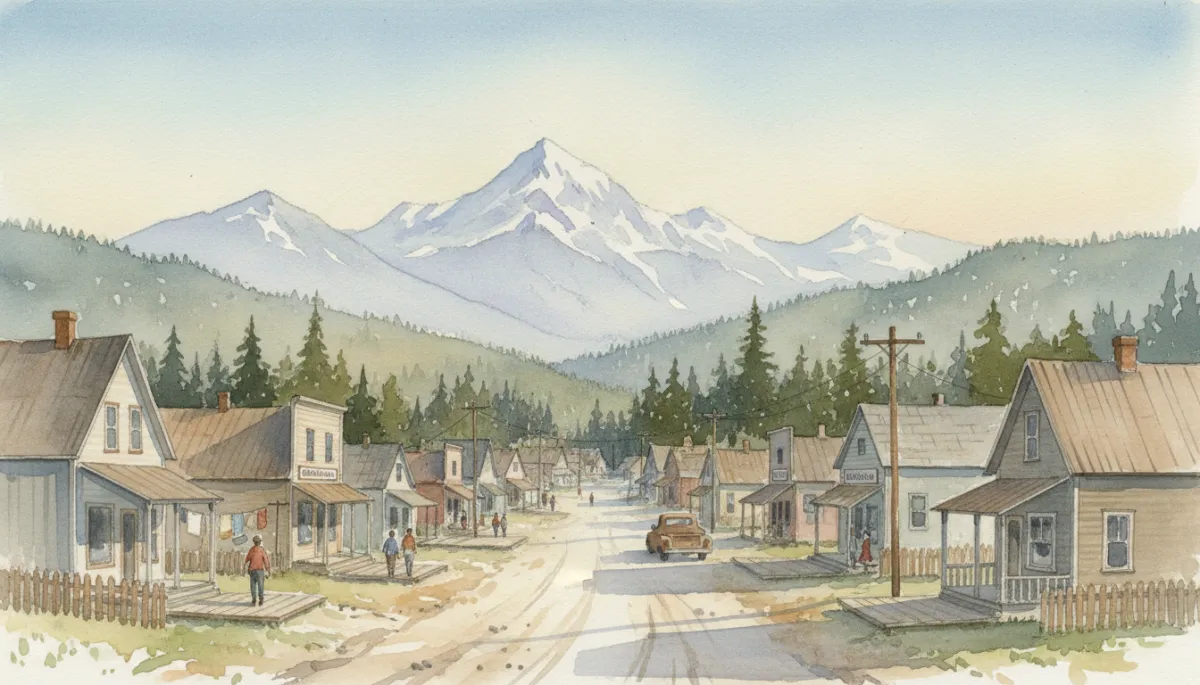
Neighbouring Cariboo communities are seeing very different rates of value growth.
How Recent Sales and Forecasts Fit into the Picture
MLS data from the BC Northern Real Estate Board and CREA show that, through 2026, sales volumes in parts of the Cariboo have softened while prices have mostly held steady. For example, 100 Mile House saw fewer single‑detached sales year‑over‑year in early 2026, but the median sale price remained stable around $560,000 in Q2 (CREA stats).
Province‑wide, the BC Real Estate Association expects a small dip in average prices in 2026, followed by modest growth in 2027 and beyond. Independent forecasts using land‑title data suggest the Cariboo median price could edge up from about $415,000 in 2025 to roughly $427,000 in 2026, and continue rising gradually through 2027 and 2028. That supports the idea of slow, uneven appreciation rather than a rapid run‑up in values.
Will Property Values Rise in the Coming Years?
Pulling all of this together, the outlook for Cariboo property values is cautiously optimistic, but far from guaranteed. Several forces support the case for gradual increases:
Underlying housing need: regional housing needs reports show hundreds of additional homes required over the next 20 years in areas like Williams Lake, Quesnel, and the South Cariboo, pointing to sustained long‑term demand.
Relative affordability: compared with major BC centres, the Cariboo remains more accessible, which can attract retirees, remote workers, and families seeking value.
At the same time, higher interest rates, cautious buyers, and more listings in some sub‑markets could keep price growth muted in the near term especially in communities like 100 Mile House, where assessments were flat this cycle. In other words, values are more likely to drift upward than to spike, and the path will differ community by community.
📌 Key Takeaway: Expect a patchwork of outcomes steady values in some Cariboo communities, modest gains in others, and standout growth in pockets like Fort St. James, rather than one uniform regional trend.
Before You Rely on These Numbers: Update the Next Assessment Cycle
All of the figures discussed here such as 100 Mile House being flat at 0%, Williams Lake at +5%, Quesnel at +4%, and Fort St. James at a notable +14% are based on the latest completed BC Assessment cycle as of January 2026, with additional context from regional reporting and market statistics.
Because BC Assessment updates its roll every year, and market conditions can shift quickly, it is essential to refresh these numbers with the next assessment cycle’s figures before publishing or making major financial decisions. Check the most recent BC Assessment news release for the Cariboo, and, where available, confirm local summaries from outlets such as the 100 Mile Free Press or other Cariboo‑area newspapers to ensure you’re working with up‑to‑date data.
In a market as nuanced and as uncertain as the Cariboo, current, community‑specific information is your best guide to whether property values are likely to rise in your particular corner of the region.