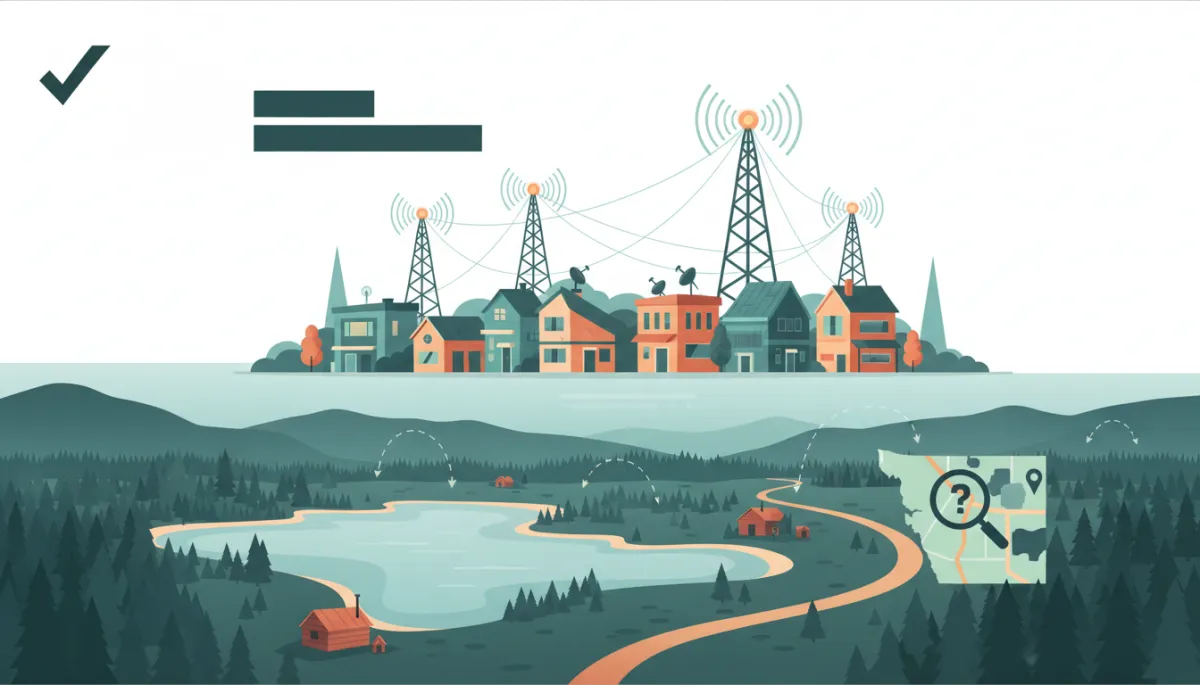
Reliable Cell Coverage in 100 Mile House, BC
Connectivity Cariboo BC, Cell Coverage 100 Mile House, Remote Lake Coverage
Is Cell Phone Coverage Reliable in 100 Mile House and Surrounding Areas?
A practical 100 Mile House FAQ on Cell Coverage, Connectivity Cariboo BC, and what buyers need to know before relying on mobile service especially for remote lake and backroad properties.
Direct Answer: Town Coverage Is Generally Reliable, Remote Areas Are Not
If you are mainly in the 100 Mile House town center or along Highway 97, cell phone coverage is generally reliable for everyday calling, texting, and data. Multiple sources, including a relocation guide from the District of 100 Mile House, note that high-speed internet and mobile service reach all portions of the in-town community, and regional broadband reports confirm extensive 3G and 4G coverage through the corridor.
Once you leave town and head toward remote lakes, side roads, and backcountry areas in the Cariboo, the picture changes quickly. Coverage becomes patchy to non‑existent, especially around secluded lakefront cabins, forest service roads, and less traveled stretches of regional highways. This is true even though provincial initiatives are steadily improving Connectivity Cariboo BC and other rural regions.
Because conditions and networks evolve, do not rely on general statements alone. Before you buy or book a property, you should: check the latest Carrier Coverage Maps for the exact address or GPS location, and always verify this article’s details against current carrier maps before publishing or making decisions . The rest of this 100 Mile House FAQ breaks down what to expect, carrier by carrier and area by area.
Understanding Cell Coverage 100 Mile House: In Town vs. Out of Town
In‑Town Coverage: 100 Mile House Core and Highway 97
Within the town limits near grocery stores, schools, medical services, and most residential neighbourhoods Cell Service Reliability is generally solid. A community relocation guide for 100 Mile House notes that high‑speed internet is available and that cell coverage reaches all portions of the community. Regional broadband strategy documents from the Cariboo Regional District further confirm that Rogers and Telus provide extensive 3G and 4G (LTE) coverage along Highway 97, which runs directly through town, with Bell riding on similar infrastructure and some emerging 5G presence in the area.
For most people living, working, or shopping in the town center, that translates into:
Reliable voice calls and texting across major carriers (Telus, Bell, Rogers)
Usable 4G/LTE data for email, browsing, GPS navigation, and social media
Increasing access to 5G in select spots, depending on carrier upgrades and device support
Crowdsourced performance data for British Columbia as a whole shows Bell and Telus with strong speeds and reliability, and local Opensignal ratings for the Cariboo Prince George region give Bell, Rogers, and Telus three to four stars for coverage and experience. While this is regional rather than town‑specific, it supports the idea that Cell Coverage 100 Mile House is reasonably dependable in populated areas.
Out‑of‑Town Reality: Remote Lake Coverage and Backroads in the Cariboo
The story changes as soon as you leave the main corridor. The Cariboo is a vast region of rolling hills, dense forests, and hundreds of lakes. That natural beauty comes with a trade‑off: many areas simply do not have consistent mobile signal. A provincial connectivity benchmarking report notes that roughly 4,800 km of BC’s primary and secondary highways lack cellular coverage, with about 3,100 km also lacking power for towers conditions that absolutely affect rural Cariboo routes and side roads near 100 Mile House.
For Remote Lake Coverage, such as at secluded cabins or off‑grid recreational lots, you should expect:
Pockets of usable signal near certain lakes with nearby towers (for example, areas improved by recent Telus infrastructure near Horse Lake)
Significant dead zones where calls drop and data does not load at all, especially behind hills, in deep valleys, or far from Highway 97 and main routes
Highly variable reception even around the same lake one side may have two bars on Telus, while another bay has no service on any carrier
📌 Key Takeaway: In town, you can usually count on your phone. At many remote lakes and on forest service roads around 100 Mile House, you absolutely cannot. Always plan for stretches with no service.
How the Major Carriers Perform in 100 Mile House and the Cariboo
Telus and Bell: Shared Rural Network Strength
Across British Columbia, Telus and Bell share much of their radio‑access network, meaning that in many communities including 100 Mile House and the surrounding Cariboo—their coverage footprints are effectively the same. Locals and online communities often report that Telus/Bell have the best reach in rural and mountainous terrain, which is consistent with provincial performance metrics showing strong speeds and high reliability scores for both providers.
In practical terms, for Connectivity Cariboo BC:
In town: Telus and Bell offer robust 3G/4G service, with some 5G showing up in coverage tools; calls, texts, and day‑to‑day data should work reliably for most users.
Near major roads: Along Highway 97 and other primary routes, you will often keep a usable signal, though there can still be gaps in low‑lying or heavily forested stretches.
Remote lakes and backroads: Telus/Bell may give you the best chance of a bar or two, but there are still many places with no service at all.
Rogers: Emerging 5G and Strong Reliability Ratings
Rogers has invested heavily in its national network and is often recognized for having one of the most advanced 5G footprints in Canada. Regional broadband strategy documents indicate that Rogers provides extensive 3G and 4G coverage along Highway 97 near 100 Mile House and has begun rolling out 5G in the area. Opensignal ratings show Rogers performing especially well for reliability in the broader Cariboo–Prince George region, earning top marks in that category.
However, Rogers’ rural footprint can be more variable than Telus/Bell in certain interior and mountainous zones. For someone focused on Cell Service Reliability in town and along major routes, Rogers can be a strong option; for deep backcountry adventures, you should still verify coverage at specific locations using Carrier Coverage Maps.
What About Smaller or Discount Brands?
Many discount providers such as Koodo, Fido, Virgin Plus, and others run on the same underlying networks as Telus, Rogers, or Bell. That means their coverage is usually identical to the parent carrier in and around 100 Mile House. If budget is a concern, these brands can be a good way to access the same Cell Coverage 100 Mile House at a lower monthly cost, but always confirm which parent network they use and check that network’s maps for your address.
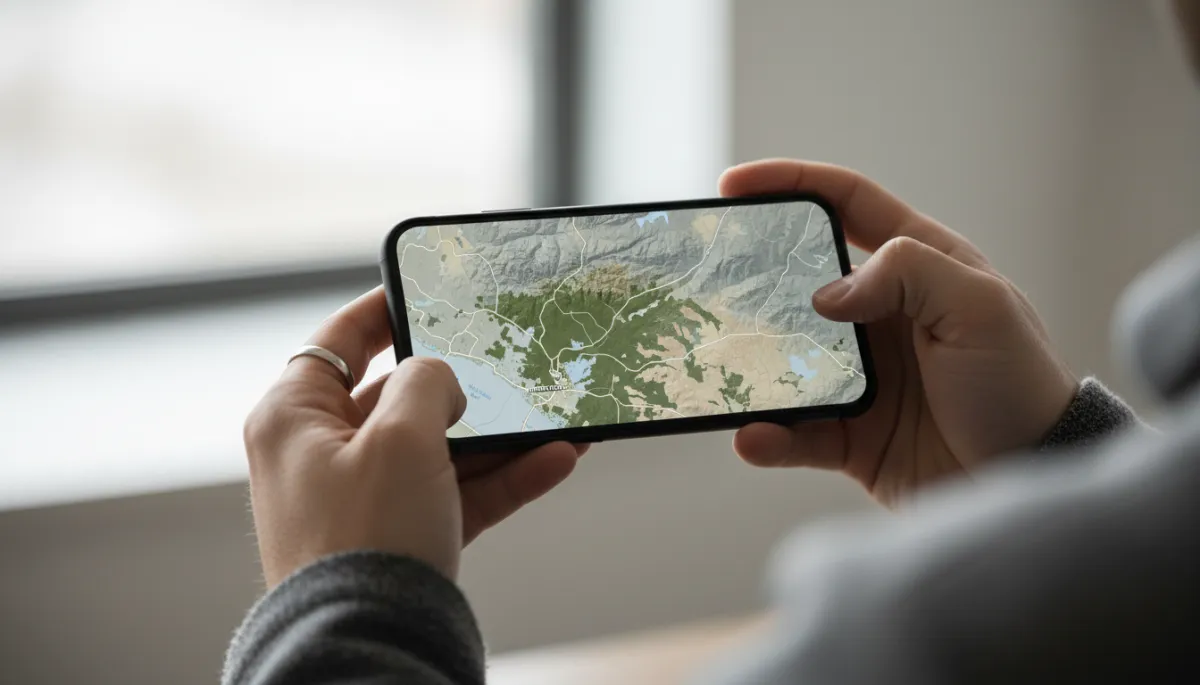
Checking Carrier Coverage Maps by exact address is essential before buying remote Cariboo property.
Why You Must Check Carrier Coverage Maps for Specific Properties
No matter how many general statements you read about Connectivity Cariboo BC, cell coverage is ultimately hyper‑local. Hills, trees, distance from the nearest tower, and even the construction materials of a cabin or home can dramatically change your experience. That is why, if you are:
Buying a home in town and want to be sure your carrier works well indoors, or
Purchasing a remote lakefront property or recreational lot and hoping to work remotely or stay reachable,
you should always consult the official Carrier Coverage Maps for each major provider before you commit. Most carriers offer interactive maps where you can enter a postal code or zoom right down to a specific road or shoreline. Third‑party tools like PlanHub and CellCoverageCanada can also help you compare multiple networks at once, but they should supplement not replace the official maps.
💡 Pro Tip: When you check coverage maps, look not only at “coverage vs. no coverage” but also at the type of service (3G, 4G, 5G) and whether the map labels your location as “excellent,” “good,” or “limited.” This matters for video calls, remote work, and hotspot use.
Special Considerations for Remote Lake and Backroad Properties
Safety and Emergency Planning
For many buyers, Remote Lake Coverage is about more than streaming or social media—it is about basic safety. If you are fishing, snowmobiling, or simply living in a quieter corner of the Cariboo, you need to assume that:
You may not be able to call 911 from your property or certain stretches of road.
Weather, power outages, or fibre cuts (as seen in a 2026 incident near Fraser Lake) can temporarily knock out service even in areas that usually have coverage.
Satellite‑to‑cell features on modern smartphones or dedicated satellite messengers may be worth considering as a backup.
Remote Work and Lifestyle Expectations
If your dream is to work remotely from a Cariboo lake house, pay special attention to both mobile and home‑internet options. Some properties may have decent Cell Coverage 100 Mile House style reception with a signal booster and line‑of‑sight to a tower; others may require fixed wireless, satellite internet, or a combination of solutions. In many cases, you cannot assume that a single smartphone will cover all your communication needs.
Before you remove conditions on a purchase, ask yourself:
Have I checked Carrier Coverage Maps for at least two major providers at this exact location?
Can I physically test a phone (or hotspot) on the property before finalizing the sale or long‑term rental?
Do I have a backup plan such as satellite messaging, landline, or a neighbour’s connection for emergencies?
Practical Steps to Check and Improve Cell Service Reliability
How to Use Carrier Coverage Maps Effectively
To get an accurate picture of Connectivity Cariboo BC for your specific address:
Visit each major carrier’s website (Telus, Bell, Rogers) and open their coverage map tool.
Enter the exact address, postal code, or GPS coordinates of the property you are considering.
Zoom in until you can clearly see your road, shoreline, or lot lines, and note the level and type of coverage (3G/4G/5G, excellent/good/limited).
Cross‑reference with third‑party tools like PlanHub or CellCoverageCanada to see how tower density and user‑reported coverage compare.
⚠️ Important: Coverage tools are estimates based on modelling and reported data. They are a guide, not a guarantee. Whenever possible, test a phone on‑site before relying on any map official or third‑party.
Boosting Signal Where Coverage Exists but Is Weak
In some fringe areas around 100 Mile House, Cell Service Reliability may be “almost there”—one or two bars outside, but dropped calls indoors. If coverage maps show service at your location but performance is inconsistent, you might improve things with:
Signal boosters (repeaters): Hardware that captures an outdoor signal and amplifies it indoors, useful for cabins or homes with metal roofs or thick walls.
Wi‑Fi Calling: Many carriers allow calls and texts over any internet connection; if you have reliable home internet but weak cell signal, this can be a game‑changer.
Directional antennas: For some fixed wireless internet or booster setups, a rooftop antenna aimed at the nearest tower can significantly improve signal quality.
Final 100 Mile House FAQ Summary: Can You Rely on Cell Service Here?
Bringing it all together, here is the concise answer to the core question in this 100 Mile House FAQ about cell coverage and Connectivity Cariboo BC:
In the 100 Mile House town center and nearby residential areas: Yes, you can usually rely on cell service for everyday use. Telus, Bell, and Rogers all provide meaningful coverage, with strong 3G/4G and growing 5G presence. For most residents and visitors staying in town or close to Highway 97, Cell Coverage 100 Mile House is reliable enough for calls, texts, navigation, and typical data use.
At remote lakes, on backroads, and in sparsely populated parts of the Cariboo: No, you should not assume continuous coverage. Remote Lake Coverage is highly variable, and large areas still have weak or no signal on any carrier. For recreation, remote work, or safety, you must plan for dead zones and consider backup communication options.
Above all, remember that coverage is location‑specific. Whether you are a homebuyer, investor, or seasonal visitor, the most important step is to check up‑to‑date Carrier Coverage Maps for your exact property or campsite and, where possible, physically test devices on‑site. And because networks change over time, any summary like this should always be verified against the latest official carrier maps before it is published, shared, or used for final decisions.
With realistic expectations and a bit of planning, you can enjoy the best of both worlds in 100 Mile House and the broader Cariboo: the convenience of modern connectivity where it exists, and the quiet, unplugged beauty of BC’s interior where it does not.