Cost of Living in 100 Mile House, BC
Cost of Living, 100 Mile House BC
How Much Does It Cost to Live in 100 Mile House, BC?
Living in 100 Mile House, a rural BC community, typically costs about $1,400–$1,600 per month for a single person and roughly $2,500–$3,000 per month for a couple, including rent and basic expenses. That’s generally lower than big-city British Columbia, but still shaped heavily by housing and transportation costs.
At a Glance: Cost of Living in 100 Mile House
Compared with major urban centres, the cost of living in 100 Mile House is relatively modest, reflecting broader trends across rural BC. Cost-of-living tools and local estimates suggest a single person can get by on around $1,400–$1,600 per month, while a couple or small family will more realistically spend $2,500–$3,000, depending on housing choices and lifestyle.
Housing Costs: Buying Versus Renting
Housing is the biggest factor in your budget. According to BC Assessment’s 2026 release, the average assessed property value for a typical single-family home in the District of 100 Mile House is about $398,000 (assessed as of July 1, 2025). That’s noticeably lower than recent listing and sale prices, which often fall in the mid–$500,000s to low–$600,000s range.
For renters, data is thinner, as is common in small rural markets. A nearby example in 108 Mile Ranch shows a three-bedroom house around $2,500 per month. Cost-of-living platforms estimate a one-bedroom outside the town centre at roughly $774 per month, which aligns with what many residents report for modest, older rentals when they can find them.
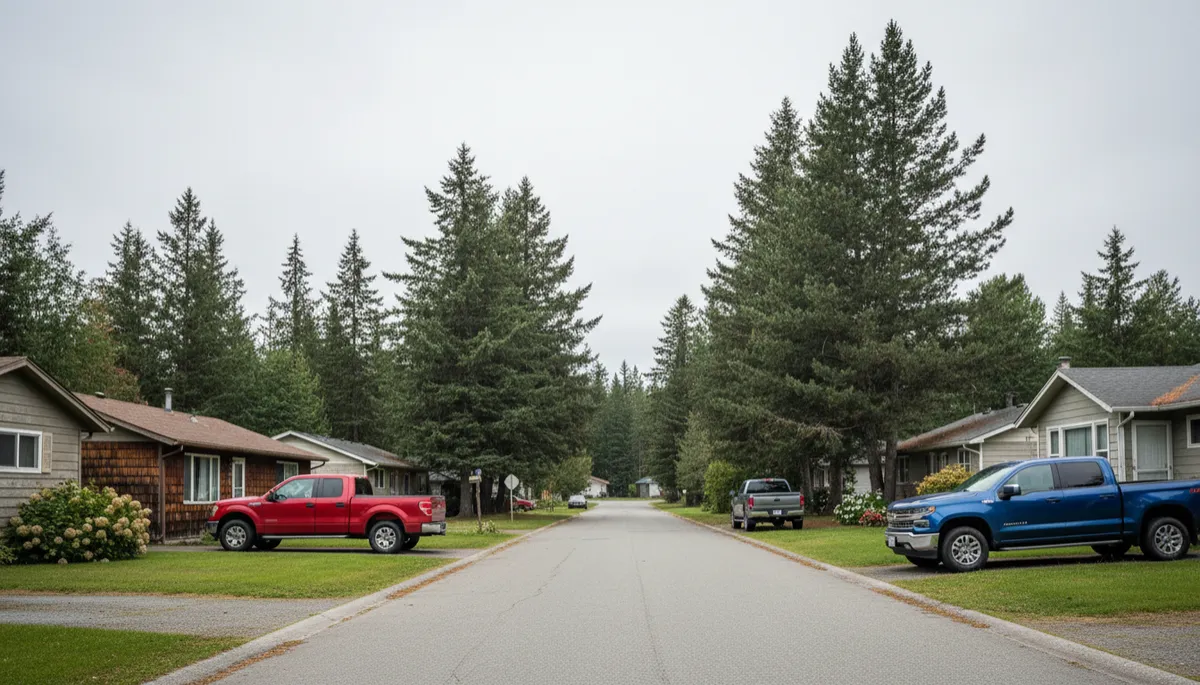
Typical detached homes sit below big-city prices but still drive most monthly costs.
Everyday Expenses: Groceries, Utilities, and Getting Around
Groceries in 100 Mile House are similar to many other rural BC communities, where transport adds a small premium. Estimates place a reasonable grocery budget for one person between $230 and $365 per month, depending on how much you cook at home versus eat out. A casual restaurant meal might cost around $18–$20, while a mid-range dinner for two can land near $55–$60.
Utilities are relatively manageable. For a small home or apartment, you might spend around $90–$130 per month on basic utilities, plus roughly $45–$60 for internet. Some estimates bundle utilities, internet, and mobile together at about $230 per month for a single person, which is a good planning figure if you like a bit of a buffer.
As in much of rural BC, owning a vehicle is often essential. A public transit pass is estimated in the $60–$65 range, but service is limited. Budget at least $150 per month for transportation if you drive, more if you commute longer distances or face winter fuel and maintenance spikes.
Incomes, Affordability, and Rural BC Trade-Offs
According to housing market platform Wahi, the average household income in 100 Mile House is $82,298 as of 2026. That’s a marked increase from earlier census data and puts local earnings roughly in line with many other rural BC communities that rely on a mix of forestry, tourism, small business, and remote work.
When you compare that income level with both the $398,000 average assessed property value and sale prices in the mid–$500,000s, housing can still feel tight: ownership often runs to five or more times average household income. The trade-off, however, is a quieter lifestyle, short local commutes, and easier access to nature than in Vancouver, Victoria, or Kelowna—at a noticeably lower overall cost of living than those urban centres.
💡 Rural BC Reality Check: Expect lower housing prices than in major cities, but also fewer rentals, more driving, and a job market that can be more specialized or seasonal.
Is 100 Mile House Right for Your Budget?
If you are relocating from a large BC city, you may find that 100 Mile House delivers more space and a slower pace for a lower monthly spend, particularly if you can secure housing close to the $398,000 assessed-value range. Remote workers, retirees, and families who value outdoor recreation often see strong lifestyle value for the cost.
On the other hand, if you rely on highly specialized urban jobs or want a wide selection of rentals and amenities, you’ll need to weigh those factors carefully. Incomes around $82,298 per household can support a comfortable, if modest, lifestyle here, but budgeting thoughtfully especially for housing and transportation is essential.
Ready to Explore Life in 100 Mile House?
Thinking about a move to 100 Mile House or another rural BC community? Take the next step today: compare current listings against your budget, speak with a local real estate professional, and map out your monthly costs using the figures in this guide. A clear, realistic budget is the best foundation for a confident relocation decision.