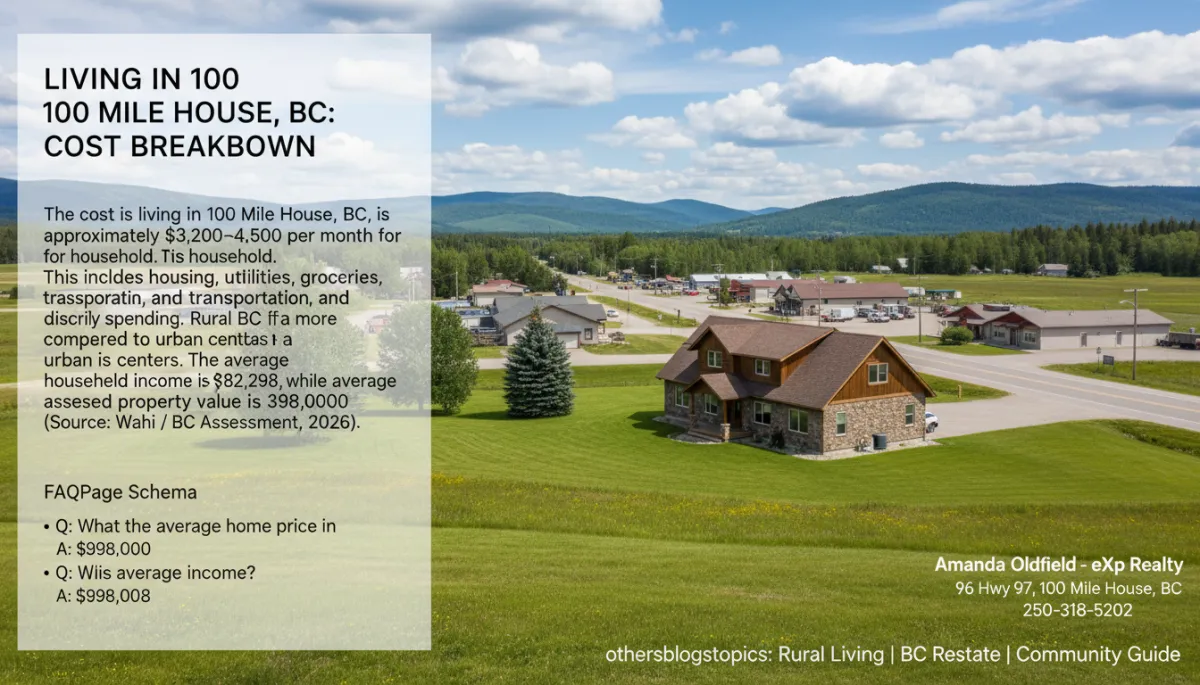
Cost of Living in 100 Mile House, BC - 2026 Guide
Cost of Living, 100 Mile House BC, Rural BC Real Estate
How Much Does It Cost to Live in 100 Mile House, BC?
In 2026, a typical single person can live in 100 Mile House for roughly $1,400–$1,600 per month (including rent, groceries, utilities, and modest dining out), while couples often spend around $3,300 per month. That makes this rural BC community more affordable than many larger cities, especially when paired with relatively moderate housing costs.
At a Glance: Monthly Cost of Living in 100 Mile House
Recent estimates show that 100 Mile House remains one of rural BC’s more accessible communities for day‑to‑day living, especially compared with major centres like Vancouver or Kelowna. Using 2026 data from sources such as Rewire Abroad and CityCost, here is a simplified snapshot of what you might spend each month as a renter in town:
Expense Category Single Person (Approx.) Couple (Approx.) Rent (1‑bedroom) $800–$900 Included in total below Groceries ~$230 ~$400–$450 Utilities & Internet/Phone ~$230 ~$250–$300 Dining Out & Extras ~$170 ~$300–$400 Estimated Total~$1,400–$1,600~$3,300/month (CityCost model)
💡 Pro Tip: Local BC Transit fares are just $1.50 per ride or $35 for a monthly pass, which can help keep transportation costs down if you’re not driving every day.
Cost of Living in Rural BC: How 100 Mile House Compares
Rural BC communities like 100 Mile House often offer a trade‑off: lower housing costs and quieter lifestyles, balanced against slightly higher prices on certain goods due to distance from major distribution hubs. Historic comparisons suggest groceries and household items here can be somewhat more expensive than in Kamloops or Williams Lake, but housing and overall monthly budgets still tend to come in lower than in big urban centres.
If you value access to lakes, trails, and a tight‑knit community over nightlife or big‑city amenities, the overall cost of living in 100 Mile House can feel very reasonable, particularly for buyers who lock in a mortgage instead of paying rising rents in larger cities.
Income Levels: Can Residents Afford Life in 100 Mile House?
According to Wahi’s 2026 housing market snapshot, the average household income in 100 Mile House is $82,298. SearchListingsOnline places the median household income slightly higher, at around $84,000. Both figures are well above the most recent official 2021 Census numbers, reflecting wage growth and changing local employment patterns in the last few years.
When you compare an income in the low‑$80,000 range with typical renter or homeowner budgets outlined above, many households find day‑to‑day expenses manageable especially dual‑income families. As in most rural BC communities, though, incomes can vary widely by sector, so it’s wise to review your own numbers carefully before making a move.
Housing Costs and Property Values in 100 Mile House
Housing is where 100 Mile House really stands out in the rural BC cost‑of‑living conversation. BC Assessment’s 2026 release shows the average assessed property value at $398,000 for a typical single‑family home in the District, based on market values as of July 1, 2025. This figure is used primarily for property tax purposes and tends to be more conservative than recent sale prices.
Real‑time market data from the BC Northern Real Estate Board (BCNREB) paints a more dynamic picture. In early 2026, the median sale price for detached homes hovered around $503,000, with average sale prices year‑to‑date reaching approximately $565,688. In other words, while the assessed average is about $398,000, many homes are actually selling above the $500,000 mark still often below what you’d pay for comparable properties in many southern BC markets.
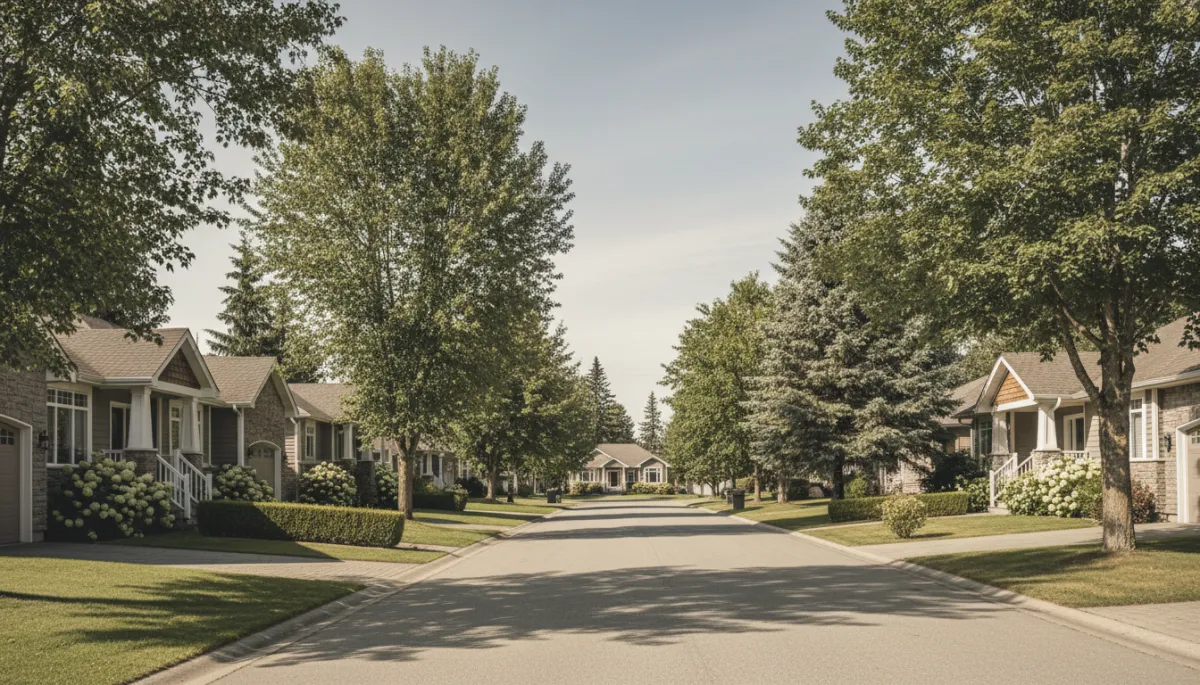
Detached homes in 100 Mile House often deliver more space per dollar than city properties.
Renting vs. Buying: Which Makes Sense for You?
For renters, Rewire Abroad reports average one‑bedroom rents of about $801 per month in the town centre and $774 outside the core. Even allowing for some variation, this is significantly lower than rents in many BC cities. It can be a comfortable starting point if you’re testing out life in rural BC before committing to a purchase.
For buyers, the gap between the $398,000 assessed average and the $500,000+ market prices is important. A well‑priced home may still align with local incomes around $82,298, but every property is different. Factors like acreage, lake access, outbuildings, and recent renovations can move a listing well above or below the “typical” range. Working with a local realtor who understands these nuances is essential for staying on budget.
Everyday Expenses: Groceries, Utilities, and Getting Around
Rewire Abroad suggests a monthly grocery budget of around $230 for a single person who cooks at home, with common items like milk at roughly $2–$3 per litre, bread around $3–$4 per loaf, and a dozen eggs just over $5. A casual meal at an inexpensive restaurant averages about $18, while a mid‑range dinner for two comes in around $56, which is in line with many other small BC communities.
Utilities plus internet and phone are estimated at roughly $232 per month for a typical household, though this will vary with home size, heating type, and personal usage. Transit costs are low, but like most rural BC communities, many residents rely on their vehicles, so fuel and maintenance should be factored into your personal budget.
FAQs About the Cost of Living in 100 Mile House, BC
Below are quick answers to some of the most common questions people ask when they’re considering a move to 100 Mile House or another rural BC community.
Is 100 Mile House cheaper than bigger BC cities?
In general, yes—especially when it comes to housing. While groceries and some goods can be slightly more expensive than in regional hubs, average rents and typical detached home prices are usually far below those in Greater Vancouver, Victoria, or the Okanagan. For many buyers, that trade‑off makes rural BC living more attainable.
Can a household earning $82,298 afford to buy a home here?
With the average household income at $82,298 and assessed values around $398,000, many local households can qualify for a modest detached home, depending on debt levels, down payment, and interest rates. However, because actual sale prices often exceed $500,000, it’s crucial to get pre‑approved and work closely with a realtor who understands current lending guidelines and local price trends.
How much should I budget as a family with children?
CityCost estimates suggest a family of three in 100 Mile House might spend between $4,750 and $6,200 per month, including rent or mortgage payments. Your own total will depend on childcare, activities, commuting patterns, and whether you own or rent. Still, many families find their housing dollars stretch further here than in larger BC centres.
Next Steps: Explore 100 Mile House Real Estate
If you’re weighing the cost of living in rural BC against your current lifestyle, 100 Mile House deserves a closer look. From lakefront cabins and hobby farms to in‑town family homes, there is a wide range of properties that can work with an income in the $80,000–$90,000 range especially if you plan strategically and understand the gap between assessed and market values.
Ready to dive deeper into local neighbourhoods, buyer tips, or market trends? Explore othersblogstopics on rural BC living, first‑time home buying, and how to read BC Assessment values versus MLS® prices for a clearer picture of what your money can buy.
When you’re ready to explore homes that fit your lifestyle and budget in 100 Mile House, connect with a local expert who lives and works in this market every day.
Amanda Oldfield Realtor - eXp Realty 96 Hwy 97, 100 Mile House, BC 250-318-5202