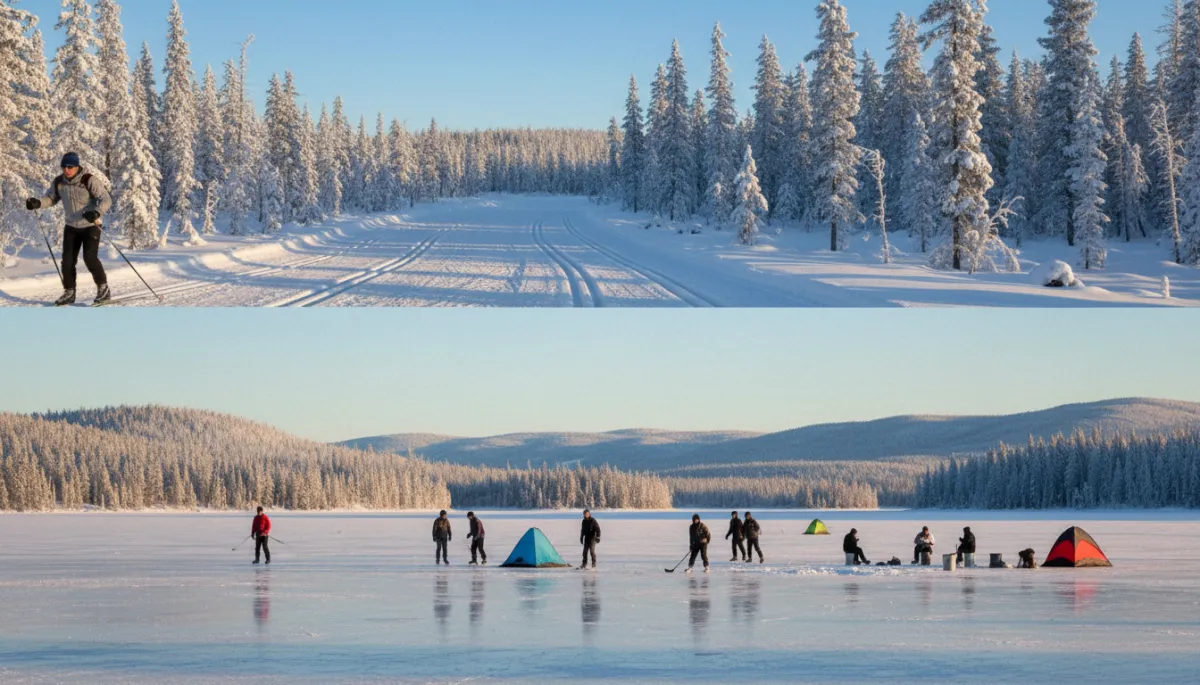
Cross-Country Skiing in South Cariboo: A Guide
Lifestyle, Outdoor Recreation, South Cariboo, Cross-Country Skiing, Winter
Cross-Country Skiing and Winter Recreation in the South Cariboo: A Developer’s Field Guide
If you’re the kind of senior engineer who spends all week refactoring legacy code and all weekend chasing clean snow and quiet trails, the South Cariboo around 100 Mile House is an excellent base camp. This guide gives a direct, no‑nonsense rundown of what’s actually available up top in winter cross‑country ski trails, skating, ice fishing, and more plus a few “developer‑style” planning tricks, complete with simple code snippets you can adapt to your own trip‑planning workflow.
What’s Actually Available Up Top in Winter?
From a pragmatic, engineer’s perspective, here’s the high‑level “API surface” of winter recreation in the South Cariboo around 100 Mile House, based on information current to September 2026 (discoversouthcariboo.ca; 100milehouse.com):
Cross-country ski trails: The 100 Mile Nordic Ski Society maintains ~45 km of groomed trails at the 99 Mile Ski and Snowshoe area just south of town, with classic and skate options and some lit night skiing (100milenordics.com).
Other winter recreation: Snowshoeing, snowmobiling (including the Gold Rush Snowmobile Trail), downhill skiing and tubing at Mt. Timothy, sledding in Centennial Park, wildlife viewing, and accessible walks like the Marsh Trail.
Skating: Reliable indoor skating and curling at the South Cariboo Recreation Centre; an outdoor rink project is in the design and planning phase but not guaranteed to be operational in any given season (southcaribooreccentre.ca; cariboord.ca).
Ice fishing: Popular on select lakes (for example Sheridan, Canim, Green, and others), but several Cariboo lakes explicitly prohibit ice fishing in the 2025–2027 regulations (e.g., Sandy, Secret, Simon, Sardine; see BC Freshwater Fishing Regulations Synopsis).
⚠️ Always verify current status: Before you publish a guide, send guests, or drive up from the city, confirm current trail, lake, and club operating status directly with local organizations. Conditions and funding change faster than most documentation.
Cross-Country Skiing: The Core “Framework” of South Cariboo Winter
99 Mile Ski and Snowshoe Trails (100 Mile Nordics)
The main Nordic hub is the 99 Mile Ski and Snowshoe area, run by the 100 Mile Nordic Ski Society. Think of it as a well‑maintained, battle‑tested codebase: ~45 km of groomed trails, a lodge, lit loops for night skiing, and dedicated snowshoe routes (100milenordics.com; discoversouthcariboo.ca).
Trail network: Roughly 45 km of groomed cross-country ski trails with options for both classic and skate technique, plus snowshoe and dog‑friendly routes in the broader 99 Mile Recreation Area.
Night skiing: Approximately 4 km of lit trails for evening sessions, ideal if you’ve been on Zoom all day and need a post‑merge‑request reset (Active Living Guide 2024–25).
Lodge and facilities: A day lodge with warming spaces, trail passes, and basic amenities, typically open daily in season, with extended hours for night skiing (check the current schedule; hours can change by year).
As of April 2026, the Cariboo Regional District approved up to $45,000 to install solar panels at the facility and backed lighting and signage upgrades at Ainsworth Road and Highway 97 (cariboord.ca; 100milehouse.com council agenda). That’s a strong signal that the club is active and the trail system is expected to continue operating.
Historical note: 100 Mile House has hosted cross-country ski programming for years, including lessons, youth programs, and events through the 100 Mile Nordics and local schools. When you describe the area, you can safely say it has a longstanding Nordic culture, not just a one‑off season.
Seasonality and “Current Status” as of September 2026
As of mid‑September 2026, the ski trails are effectively in “maintenance mode”: no snow, no grooming, no skiing yet. Grooming typically starts once there’s enough base often late November or December, but it’s weather‑dependent. Hallis Lake near Quesnel, another major Nordic area with ~75 km of trails, is in the same boat: closed until snow arrives (caribooski.ca).
If you’re writing documentation, a blog post, or internal trip notes, avoid hard‑coding opening dates. Instead, link directly to official grooming reports or social feeds and remind readers to check them before they go.
A Simple “Trail Status Checker” Script for Nerds Who Ski
If you like automating your life the same way you automate deployments, you can build a tiny script to remind you to check conditions before a weekend trip. Here’s a toy Python example using requests and a simple config. It doesn’t scrape aggressively; it just centralizes the URLs you should manually verify before publishing or heading out:
import webbrowser
from datetime import datetime

TRAIL_SOURCES = {
    "100 Mile Nordics (99 Mile Trails)": "https://100milenordics.com/?utm_source=openai",
    "Cariboo Ski Touring Club (Hallis Lake)": "https://caribooski.ca/?utm_source=openai",
    "South Cariboo Rec Centre (Skating)": "https://www.southcaribooreccentre.ca/?utm_source=openai",
    "BC Fishing Regulations (Region 5)": "https://www2.gov.bc.ca/assets/gov/sports-recreation-arts-and-culture/"
                                        "outdoor-recreation/fishing-and-hunting/freshwater-fishing/fishing_synopsis.pdf?utm_source=openai",
}

def open_status_tabs():
    print(f"Checking winter recreation status - {datetime.now().isoformat(timespec='seconds')}")
    for name, url in TRAIL_SOURCES.items():
        print(f"Opening: {name} - {url}")
        webbrowser.open_new_tab(url)

if __name__ == "__main__":
    open_status_tabs()
It’s intentionally simple: instead of pretending we can parse every club’s HTML reliably, we just store the authoritative URLs in one place and open them when it’s time to validate information before you publish that “definitive” blog post or company offsite plan.
Ski Trails Beyond 99 Mile: Exploring the South Cariboo Network
The South Cariboo is dotted with multi‑use winter trails. While 99 Mile is the most structured Nordic area near 100 Mile House, you’ll find additional skiing and snowshoeing around Flat Lake Park, Wells Gray’s accessible edges, and local forest service roads that turn into snow highways once the snowpack settles (bcparks.ca; Wells Gray winter activities).
Flat Lake Park: Interconnected lakes and quiet forest make for mellow touring and snowshoeing. No formal grooming, so think backcountry‑lite, not race‑ready corduroy.
Gold Rush Snowmobile Trail: Primarily a snowmobile route from Clinton through 100 Mile House to Horsefly, but it intersects with other winter access points and offers a sense of the region’s scale (discoversouthcariboo.ca).
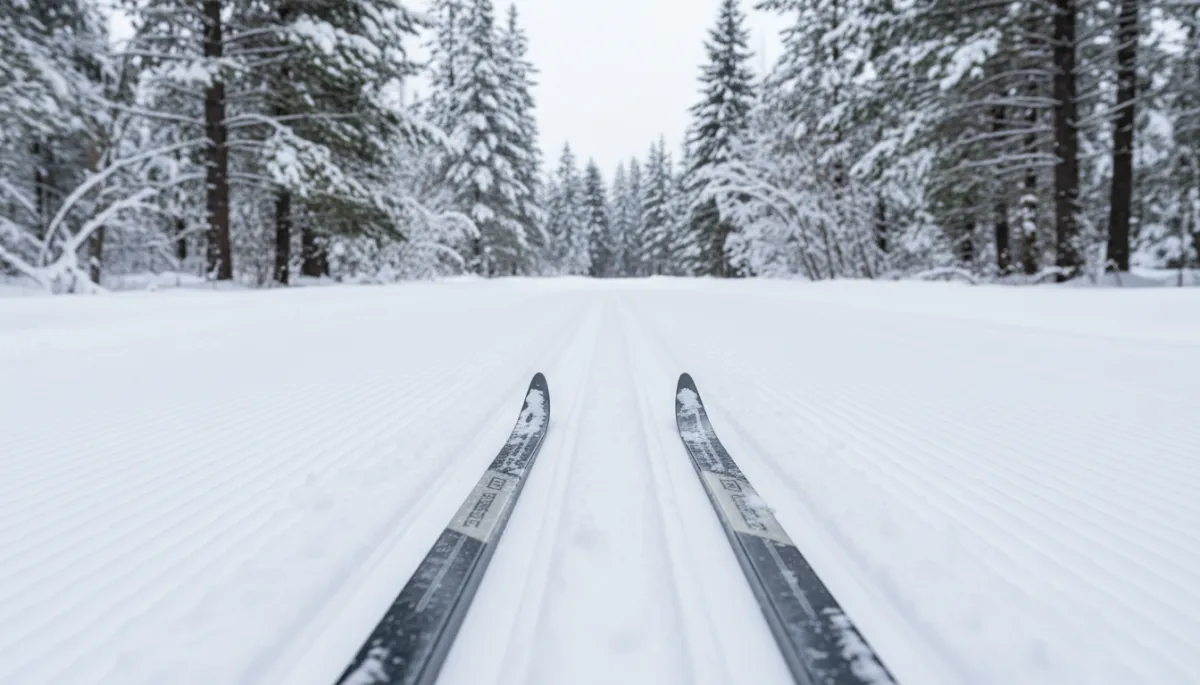
Groomed Nordic trails turn winter weekends into low-friction, high‑flow escapes from code.
Skating: Indoor Reliability, Outdoor Ambitions
South Cariboo Recreation Centre (Indoor Ice & Curling)
For consistent skating, the South Cariboo Recreation Centre in 100 Mile House is your main “production environment.” It hosts an NHL‑sized indoor rink with public skating, figure skating, hockey, and a separate curling rink managed by the 100 Mile & District Curling Club (100milehouse.com; cariboord.ca).
Public skating: Regular public sessions during the ice season, with schedules that change each year—always check the current calendar before you publish times or plan a group outing.
Curling: League and drop‑in curling via the local club, a great option when the weather outside is more “null pointer” than “bluebird day.”
Outdoor Rink Plans: Still in the “Design Phase”
An outdoor rink at the Recreation Centre has been under active discussion and design work by the 100 Mile Outdoor Rink Society, with business plan work noted for 2026 (cariboord.ca business plan). However, as of late 2026, there’s no guarantee it will be built, funded, or open in any specific winter.
Developer mindset: Treat the outdoor rink as a feature flag. It might be enabled in a given season, but your documentation should default to “indoor rink guaranteed; outdoor rink, check status.”
If you want to keep a small JSON “config” of your go‑to skating options, you might sketch something like this to remind yourself what to verify before publishing or planning:
skating_options = {
    "indoor": {
        "name": "South Cariboo Recreation Centre",
        "location": "100 Mile House, BC",
        "status_url": "https://www.southcaribooreccentre.ca/?utm_source=openai",
        "notes": "Public skating, hockey, figure skating, curling."
    },
    "outdoor": {
        "name": "Proposed Outdoor Rink at Rec Centre",
        "location": "100 Mile House, BC",
        "status_url": "https://www.cariboord.ca/media/j1cmh0zt/recreation-and-hall-business-plan-2026.pdf?utm_source=openai",
        "notes": "Project in planning/design; verify if constructed and open."
    }
}
Ice Fishing: High Reward, High Responsibility
Ice fishing in the South Cariboo can be magical: quiet lakes, long winter light, and the chance to pull trout or char through a perfectly drilled hole. But unlike skating or groomed skiing, the rules and safety constraints are more like working with low‑level memory management: powerful, but unforgiving if you skip the documentation.
Where People Go vs. Where You’re Allowed to Go
Local anglers mention lakes like Sheridan, Canim, Mahood, Green, and Bridge as good winter targets for trout, with ice typically reliable from late December into mid‑winter, depending on the year (r/fishingBC; Cariboo ice fishing discussion).
But the official regulations are non‑negotiable. In Region 5 (Cariboo), several lakes explicitly ban ice fishing, including Sandy, Secret, Simon, and Sardine Lakes, each with additional gear or quota restrictions (BC Freshwater Fishing Synopsis 2025–2027). Simon Lake, for example, has dangerously thin ice due to aeration and is marked as no‑ice‑fishing for safety reasons.
Non‑optional check: Always confirm lake‑specific rules and ice safety before drilling. Copy‑pasting last year’s “best lakes” list without re‑checking regulations is the outdoor equivalent of copy‑pasting Stack Overflow code into production.
Encoding Regulations as Data (So You Don’t Forget)
If you’re planning multiple trips or writing a recurring blog or newsletter, it can help to keep a small, human‑maintained list of “safe to mention” lakes and “do not promote” lakes, based on the current regulations. For example:
from dataclasses import dataclass

@dataclass
class LakeRule:
    name: str
    ice_fishing_allowed: bool
    notes: str

lakes = [
    LakeRule(
        name="Sheridan Lake",
        ice_fishing_allowed=True,
        notes="Popular for trout; always verify current ice thickness and regs."
    ),
    LakeRule(
        name="Sandy Lake",
        ice_fishing_allowed=False,
        notes="No ice fishing; trout catch-and-release; bait ban (Region 5)."
    ),
    LakeRule(
        name="Simon Lake",
        ice_fishing_allowed=False,
        notes="No ice fishing; aeration can cause dangerously thin ice."
    ),
]

def print_ice_fishing_summary():
    for lake in lakes:
        status = "OK to consider" if lake.ice_fishing_allowed else "DO NOT promote for ice fishing"
        print(f"{lake.name}: {status} - {lake.notes}")

if __name__ == "__main__":
    print_ice_fishing_summary()
You still need to re‑check the official synopsis each season, but this pattern forces you to consciously encode the rules instead of relying on fuzzy memory.
Winter Recreation in the South Cariboo: Beyond Skis and Augers
One of the reasons 100 Mile House works so well as a winter base is that you can mix high‑output days with low‑effort recovery, much like alternating deep‑work sprints with code review days.
Downhill skiing & tubing: Mt. Timothy Recreation Resort, about 35–40 minutes from town, offers chairlift‑served downhill runs, a tubing park, and snowshoe options perfect if you want a “gravity‑powered” day between Nordic sessions (gobc.ca).
Snowmobiling: The Gold Rush Snowmobile Trail and surrounding terrain near 70 Mile, Green Lake, and Interlakes provide huge mileage for sledders, supported by clubs like the 100 Mile Snowmobile Club and Green Lake Snowmobile Club (discoversouthcariboo.ca).
Sledding & family fun: Centennial Park’s gentle slopes are beloved for sledding, and the fenced dog park plus the 1.5 km Marsh Trail near the Recreation Centre make for easy dog walks and bird‑watching even on non‑ski days (100milehouse.com).
Planning Tips for Engineers: Turning a Winter Trip into a Repeatable “Script”
As a senior developer, you probably think in terms of repeatable processes. A good South Cariboo winter weekend can follow the same pattern: plan, validate, execute, review.
Plan: Decide your primary activity (cross-country skiing, skating, ice fishing) and backup options in case of weather or closures.
Validate: Run your “status check” by visiting: 100 Mile Nordics for trail openings and grooming; South Cariboo Rec Centre for skate schedules; BC fishing regulations and local forums for lake rules and ice reports.
Execute: Pack for redundancy: headlamps for night skiing, extra layers for ice fishing, and a backup indoor plan (skating, curling, or Marsh Trail walks) if the weather flips.
Review: After the trip, jot down what worked and what didn’t—trail difficulty, crowd levels, lake access points—so your next visit is easier, and so any blog or guide you write stays grounded in real experience.
Publishing checklist: Before you hit “publish” on any article about South Cariboo winter recreation, confirm: (1) current status of 99 Mile trails and the 100 Mile Nordic Ski Society, (2) South Cariboo Rec Centre’s latest skating schedule, (3) up‑to‑date Region 5 fishing regulations, and (4) any new closures, funding changes, or access updates.
Final Thoughts: Why the South Cariboo Works So Well for Tech People
Cross-country skiing at 99 Mile, skating at the South Cariboo Recreation Centre, and carefully planned ice fishing on the region’s lakes together make the South Cariboo a kind of winter “full stack” for outdoor recreation. 100 Mile House has a real history of cross-country ski programming and a community that keeps investing in trails, lighting, and facilities, which is exactly what you want in a winter home base.
As with any system you care about, the key is not just knowing what’s theoretically available, but verifying the current state before you depend on it. Treat trail reports, club websites, and regulation updates the way you treat production logs and release notes: required reading before you push anything live—or before you drive up to the trailhead.