Guide to Buying Rural Real Estate in BC
Real Estate, Rural BC, First-Time Buyers
A First-Time Buyer’s Guide to BC’s Rural Real Estate Market
Thinking about trading city noise for starry skies and wide‑open space? This step‑by‑step guide walks first‑time buyers through the realities of purchasing rural property in British Columbia how it differs from urban buying, what lenders look for, how appraisals work, and why distance to services can make or break your decision.
Step 1: Understand How Rural Buying Differs from Urban Buying
In Vancouver, Victoria, or Kelowna, most homes sit on serviced lots with paved roads, municipal water, sewer, and natural gas. In much of rural and northern BC think Burns Lake, 100 Mile House, or Fort Nelson properties can be on wells, septic systems, and private roads, with patchy cell coverage and limited public transit. Those differences ripple through every part of the buying process: financing, appraisals, insurance, and even your monthly budget.
Market pace: Rural markets are generally slower and more balanced than the big cities. Recent data from northern BC shows modest sales growth but flat or slightly declining median prices, unlike the sharp swings urban buyers are used to (CREA, 2026).
Property types: It’s common to see homes on large acreages, hobby farms, or land within the Agricultural Land Reserve (ALR), each with its own rules and risks.
Services and infrastructure: You, not the municipality, may be responsible for maintaining wells, septic fields, driveways, and sometimes shared access roads.
📌 Key Takeaway: In rural BC, you’re not just buying a house you’re buying a mini‑infrastructure project. Build time and budget for that reality from day one.
Step 2: Get Clear on Rural‑Specific Financing Requirements
Financing is where rural and urban buying diverge most sharply. Lenders see rural properties especially large acreages and unserviced land as higher risk. That usually means bigger down payments and fewer options than a condo in downtown Vancouver would attract.
Serviced rural homes: If the property has typical residential services, many banks will finance it similarly to an urban home, often with 20–25% down, though policies can still be stricter than in cities (WealthNorth).
Unserviced or largely land‑value properties: Expect 25–50% down and fewer mainstream lenders. Some buyers turn to BC credit unions, which can be more flexible on rural files, or to private lenders charging higher rates (often 8–14%).
Using existing equity: A home equity line of credit (HELOC) on your current property can bridge the gap, typically at Prime + 0.5–1%, letting you act quickly when the right acreage appears.
Federal and provincial programs such as CMHC‑insured mortgages and BC’s Property Transfer Tax exemptions for first‑time buyers can still apply, but they don’t remove rural‑specific hurdles like higher down payments or ALR restrictions (BC Budget 2024).
💡 Pro Tip: Before you fall in love with a property, ask your broker, “Will mainstream lenders finance this, or are we into specialty or private lending territory?”
Step 3: Learn How Rural Appraisals Work and Why They Matter More
In cities, appraisers have plenty of recent comparable sales. In rural BC, there may be only a handful of similar properties within hundreds of kilometres. That makes the appraisal process more complex—and crucial for your financing approval.
On‑site inspection: A licensed appraiser visits to assess the home, outbuildings, land size, access, and services (well, septic, power). Unique features like river frontage or timber are noted and analyzed in context (Appraisal Institute of Canada).
Multiple valuation approaches: For rural properties, appraisers often blend the sales comparison approach with the cost approach to account for limited comparable sales and substantial land value.
Highest and best use: If the land could be farmed, logged, or subdivided under local zoning and ALR rules, that potential feeds into value but only if it’s realistic and legally permitted (BC Assessment).
For you as a first‑time buyer, the key difference from urban purchases is that an unexpectedly low appraisal can derail financing or force you to increase your down payment. Build a buffer into your budget and avoid over‑bidding based only on emotion or replacement cost.
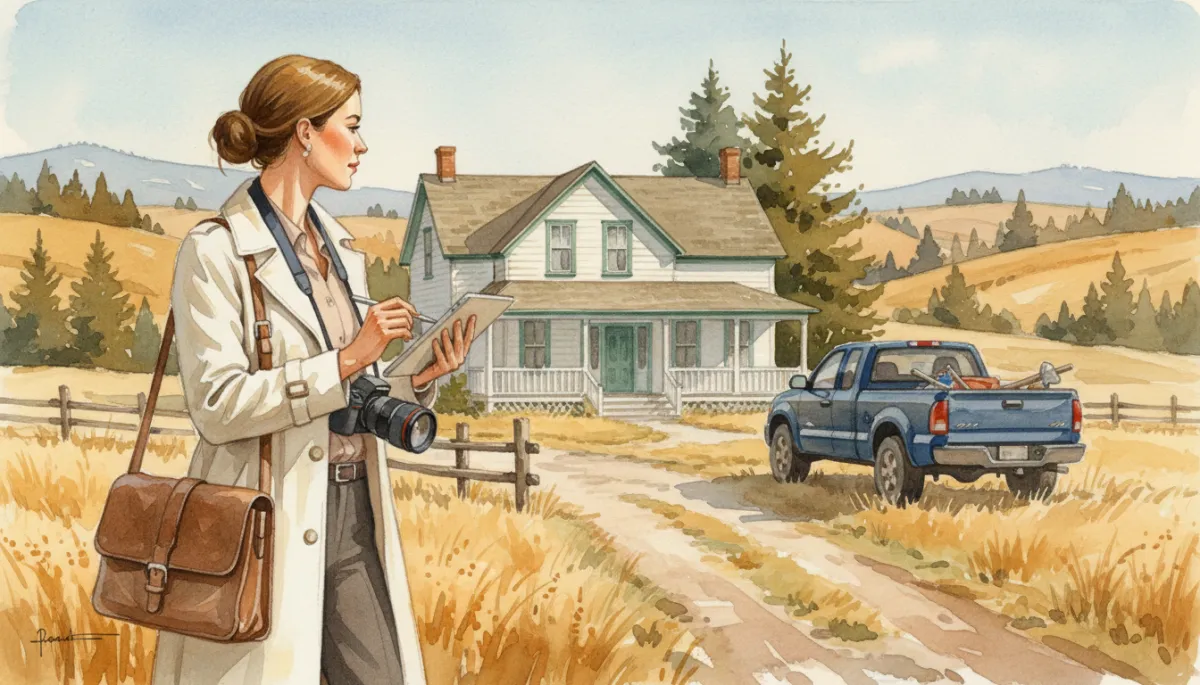
Rural appraisals weigh land, services, and location more heavily than condo-style comparisons.
Step 4: Factor in Distance to Services Every Single Month
In an urban setting, “close to services” usually means a short walk to transit, shops, and health care. In rural BC, it can mean a 45‑minute winter drive to the nearest grocery store, a two‑hour trip to a hospital, and delivery fees for everything from heating fuel to building materials.
Everyday errands: Longer drives mean higher fuel costs, more vehicle wear, and extra time. A home that looks affordable on paper can strain your budget once commuting and supply runs are added.
Emergency and health services: Consider how far you are from emergency rooms, family doctors, and pharmacies especially if you have children, seniors, or ongoing medical needs in your household.
Trades and maintenance: Plumbers, electricians, and septic service companies may charge travel time, and wait times can be longer during busy seasons or storms.
📌 Key Takeaway: When you compare rural and urban options, don’t just look at the mortgage payment. Add realistic line items for fuel, vehicle maintenance, delivery charges, and emergency travel.
Step 5: Plan for Taxes, Zoning, and the Long Game
Rural ownership costs don’t stop at the purchase price. BC’s 2026 budget tied rural property tax increases to provincial GDP growth, and a $200 rural homeowner benefit is being repealed for 2027, slightly raising long‑term carrying costs in some areas (BC Budget 2026).
If your dream property sits in the Agricultural Land Reserve, strict rules govern how you can use it, how many homes can be built, and whether you can subdivide (ALC). Before you write an offer, confirm zoning, ALR status, and any local bylaws and make your contract subject to satisfactory review of these details.
💡 Pro Tip: Work with a local REALTOR®, mortgage broker, and lawyer who regularly handle rural files. Their experience with wells, septic systems, ALR rules, and rural lenders can save you from expensive surprises.
Glossary of Key Rural Real Estate Terms (BC)
Agricultural Land Reserve (ALR)
A provincially designated zone where agriculture is prioritized and land use, subdivision, and additional housing are tightly regulated by the Agricultural Land Commission.
Appraisal
A professional, unbiased estimate of a property’s market value, prepared by a licensed appraiser and often required by lenders before approving a mortgage.
Cost Approach
An appraisal method that estimates what it would cost to rebuild the improvements (house, outbuildings) minus depreciation, then adds the land value commonly used when rural comparables are scarce.
Highest and Best Use
The most profitable, legally permissible, and physically possible use of a property for example, a working farm versus a simple rural residence.
Serviced vs. Unserviced Land
Serviced land has access to utilities such as water, sewer, and power. Unserviced land lacks one or more of these, often requiring wells, septic, or off‑grid solutions and typically higher down payments.
Vendor Take‑Back (VTB) Financing
When the seller acts as the lender for part of the purchase price, taking back a mortgage that the buyer repays over time, often used when traditional financing is difficult.
Well and Septic
Common rural systems that provide drinking water (well) and handle wastewater (septic). Their age, capacity, and condition can significantly affect value, financing, and insurance.