Hidden Truths of Rural Cariboo Properties
Real Estate, Rural Cariboo Properties
What Listing Photos Can’t Tell You About a Rural Cariboo Property
Rural Cariboo listings often look like a dream in photos towering pines, glittering lakes, cozy cabins. But still images capture only a sliver of the truth. Before you fall in love with a picture-perfect property, it’s worth asking what the camera isn’t showing you.
The Sounds, Smells, and Feel of the Land
Photos show how a property looks, not how it feels. In the Cariboo, that feeling can change dramatically from one parcel to the next. A quiet-looking acreage might sit under a busy flight path. A tranquil lakefront could echo with boat engines every summer weekend. You can’t smell the swampy shoreline after a hot July afternoon, or the neighbour’s woodstove smoke drifting across your deck in winter, from a listing gallery alone.
Standing on the land tells you whether the wind howls through the valley, whether traffic hums from a distant highway, and whether the property feels bright and open or dark and closed-in. Those sensory details matter enormously if you plan to live there year-round, retire, or host guests.
Access, Roads, and Seasonal Realities
A photo of a sunlit driveway doesn’t reveal what it’s like in March. In the Cariboo, access can be the difference between a dream property and a constant headache. Some roads are maintained by the province or regional district; others are private, shared, or barely more than skid trails. Photos won’t show you the spring mud ruts, the winter snow drifts, or the steep icy sections that turn a simple drive into an ordeal.
Listing images also can’t confirm whether emergency vehicles, fuel trucks, or moving vans can safely reach the house. Nor do they show how long it actually takes to get to town, the school bus stop, or medical care when the weather turns. Only a site visit ideally in more than one season gives you a realistic picture of day-to-day access.
Water, Septic, and Ground Conditions
A sparkling kitchen photo doesn’t tell you where the water comes from or if it’s reliable. In rural Cariboo properties, wells, cisterns, lakes, and creeks are all common sources, each with different implications for quality, quantity, and maintenance. Photos can’t show you well logs, water test results, or how the system performs in late summer when levels are lowest and demand is highest.
The same is true for septic systems and soil. Pictures of a lush lawn might hide a very old, undersized, or non‑permitted septic field. Ground that looks firm in August can be saturated in April. Understanding the age, permits, and condition of water and waste systems and the type of soil you’re building or parking on is essential due diligence that no photo can replace.
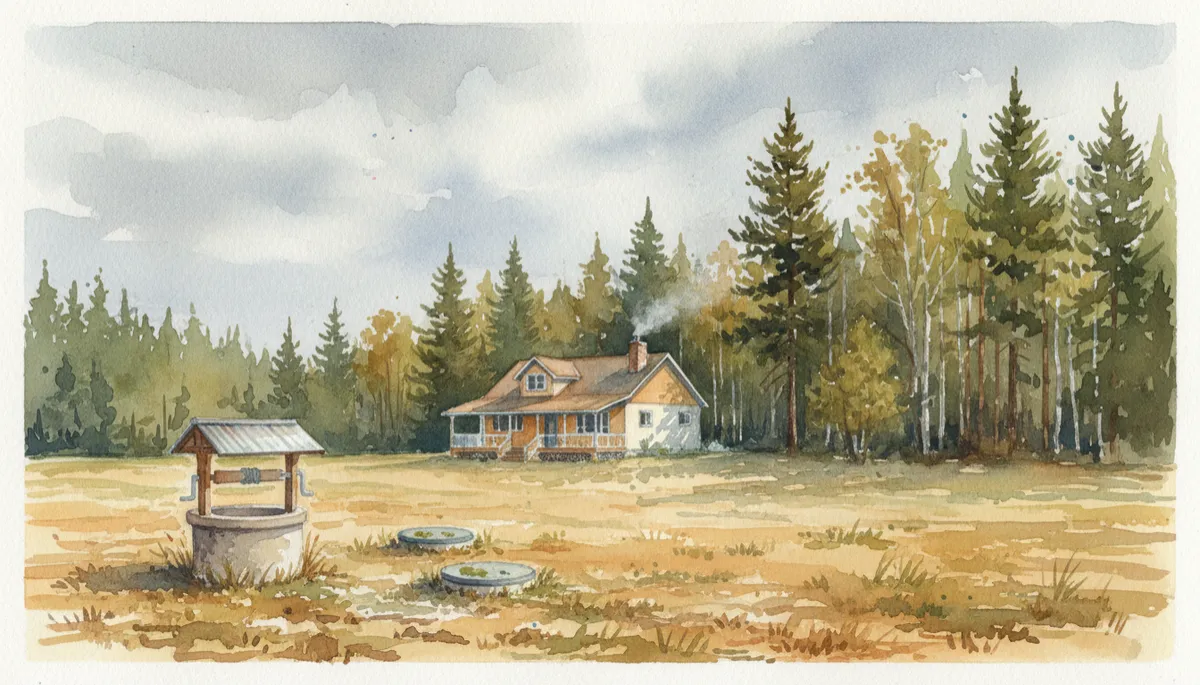
Infrastructure like wells and septic fields can be hidden in photos but costly in reality.
Neighbours, Uses, and the Wider Landscape
Clever cropping can make any property look more private than it is. What you don’t see in the frame might be just as important as what you do: a busy log yard, a hobby sawmill, an active farm, or recreational trails that bring quads and sleds past your fence line. In the Cariboo, working landscapes are part of the region’s character but they also come with noise, dust, and changing activity levels throughout the year.
Listing photos also won’t show you pending developments, zoning nuances, or how the valley collects smoke during wildfire season. Talking to neighbours, checking local plans, and walking the boundaries can reveal far more about the true context of the property than any polished photo gallery.
Time, Maintenance, and Lifestyle Fit
A wide-angle shot of a big meadow looks romantic. It doesn’t show the hours of mowing, fencing, snow clearing, and general upkeep required to keep a rural Cariboo property safe and enjoyable. Nor do listing photos reveal how much time you’ll spend managing wood heat, hauling supplies, or dealing with wildlife that treats your garden like an all‑you‑can‑eat buffet.
Ultimately, photos can sell you on a fantasy. Your job is to discover whether the reality fits your lifestyle, budget, and energy. That means stepping beyond the screen: visiting in person, asking detailed questions, and working with professionals who understand the unique rhythms and realities of the Cariboo.
📌 Key Takeaway: Listing photos are a starting point, not a decision‑making tool. In the rural Cariboo, what you can’t see in the pictures often matters more than what you can.