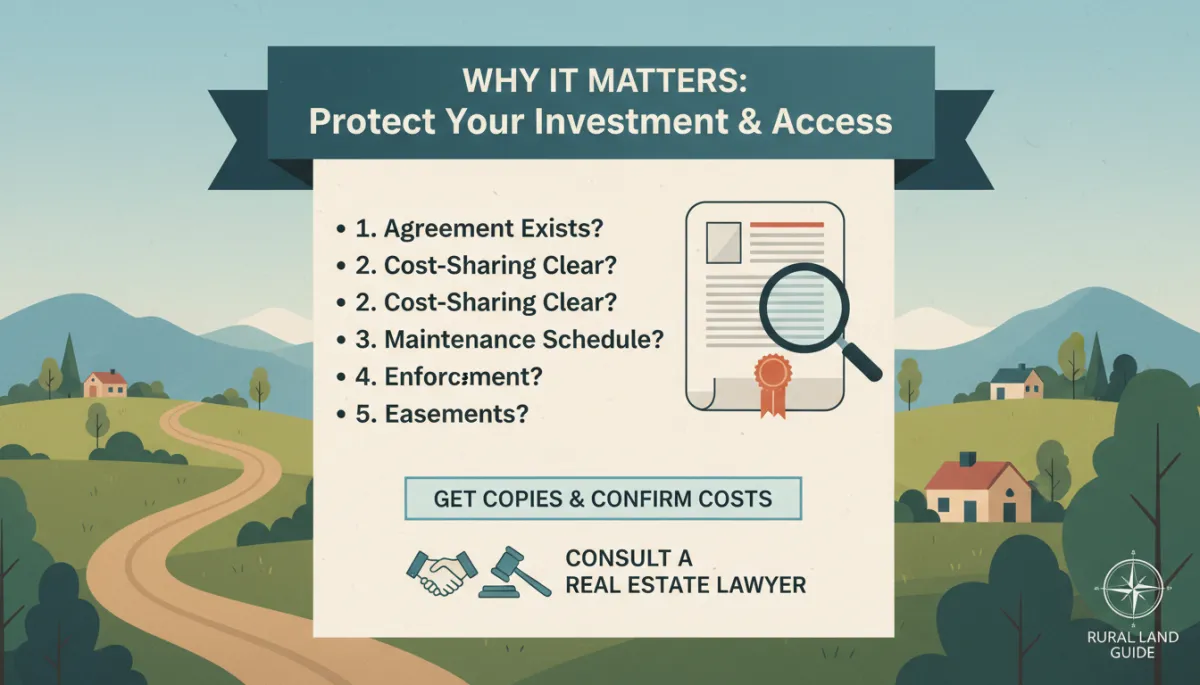
Understanding Private Road Maintenance Agreements
Real Estate, Rural Property, Private Roads
Legal & Regulatory Private Road Maintenance Agreements: What Rural Buyers Need to Understand
Buying a home on a private road can be a smart rural or semi-rural choice, but it also brings legal responsibilities and shared costs that many buyers overlook until there is a dispute or a big repair bill.
Why Private Road Maintenance Agreements Matter for Rural Buyers
This matters because when you buy on a private road, you and your neighbors not the local authority are typically responsible for keeping that road safe, passable, and insurable. If the road fails, you may face unexpected costs, disputes with neighbors, difficulty getting deliveries or emergency services, and even problems with mortgage lenders or future buyers. A clear, written private road maintenance agreement sets out who pays what, who decides on repairs, and how conflicts are handled, helping protect both your access and your property value.
Checklist: Questions to Ask Before Buying on a Private Road
Use this checklist early in your search and again during conveyancing so you understand your legal and financial obligations before you commit.
Who owns the road? Is it jointly owned by the adjoining owners, a developer, a homeowners’ association, or a third party?
Is there a written private road maintenance agreement? If so, is it recorded against the title or held as a separate contract?
Who is required to contribute? Do all properties using the road pay, or only some of them? Are future owners automatically bound?
How are costs shared? Equally per household, by frontage, by usage (for example, heavier farm vehicles), or by another formula?
What types of work are covered? Routine grading, snow removal, drainage improvements, resurfacing, culvert replacement, tree trimming, or only major repairs?
Who decides when work is needed? Is there a committee, majority vote of owners, or a management company making decisions and hiring contractors?
Are there annual dues or a reserve fund? How much is collected, how often, and what happens if the fund is not enough for major works?
What if a neighbor refuses to pay? Does the agreement allow for interest, liens, or legal action to recover unpaid contributions?
Are there standards for road condition? For example, minimum width, gravel depth, snow-clearing timelines, or weight limits for heavy vehicles.
Does the road meet lender and insurer requirements? Ask whether mortgage lenders commonly raise issues and whether emergency services can access the property year-round.
Is there liability or road insurance? Who holds the policy, what does it cover, and how are premiums shared among owners?
How are disputes resolved? Does the agreement require mediation, arbitration, or court action, and who pays the legal costs?
Reviewing the actual agreement reveals your real cost and risk, not just assumptions.
Always Obtain and Review the Private Road Maintenance Agreement
Before you commit to purchase, insist on a copy of any existing private road maintenance agreement. Do not rely on verbal assurances from sellers or neighbors about “how we usually do it.” Ask your real estate agent and conveyancer to obtain the document, and check that it is either registered on title or otherwise legally binding on future owners. If no agreement exists, you should understand that you may be exposed to informal arrangements, potential conflicts, and difficulty enforcing contributions from others who use the road.
Confirm Cost-Sharing Terms During Conveyancing
During the conveyancing process, make it a specific task to confirm exactly how costs are shared and what you will be expected to pay. Ask your conveyancer or closing attorney to:
Compare the agreement’s cost-sharing formula with the number and type of properties using the road.
Identify any arrears or upcoming special assessments for major works already planned or discussed.
Clarify whether your obligation is capped, variable, or open-ended as the road ages.
Understanding these terms before closing helps you budget realistically and decide whether the property still represents good value once road responsibilities are factored in.
Why You Should Consult a Real Estate Lawyer
Private road arrangements can involve easements, covenants, shared driveways, and local regulations that are not obvious from a quick read of the contract. Consulting a real estate lawyer who understands rural properties is one of the best ways to protect yourself. They can:
Verify that the maintenance agreement is enforceable and correctly registered.
Explain your long-term obligations and potential liabilities in plain language.
Flag any clauses that could cause disputes, such as vague standards or unfair voting rules.
Suggest amendments or additional protections you might negotiate before closing.
While an extra legal review adds a modest upfront cost, it can prevent far more expensive surprises later, especially if the road requires major work or neighbor relationships become strained.
Final Thoughts for Rural Buyers
A private road does not have to be a deal-breaker, but it should never be an afterthought. By asking the right questions, obtaining and reading the maintenance agreement, confirming cost-sharing during conveyancing, and getting advice from a qualified real estate lawyer, you can move forward with clear eyes and realistic expectations about life and driving on a private rural road.