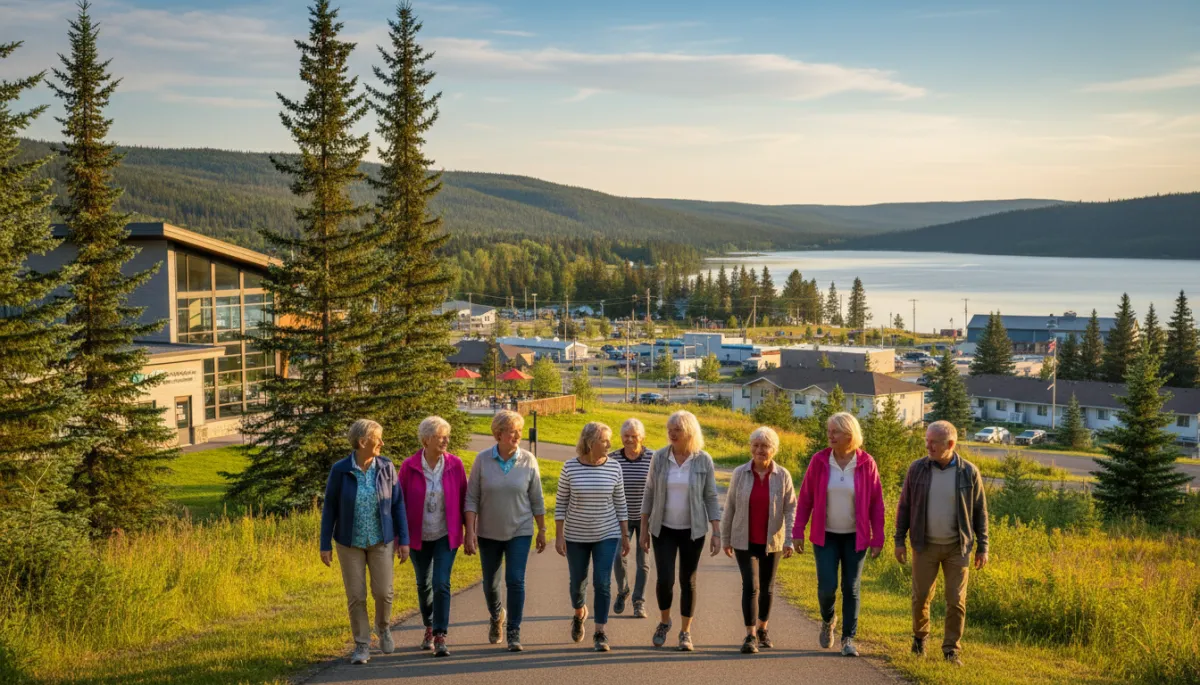
Retire in South Cariboo, BC: Healthcare & Housing
Retirement, British Columbia, South Cariboo, 100 Mile House
Retiring in South Cariboo, BC: Healthcare, Housing, and Community Life
If you are looking for a quieter, more affordable retirement in British Columbia without giving up essential healthcare, amenities, and a sense of community the South Cariboo, centred on 100 Mile House, is highly suitable for many retirees. It combines small‑town friendliness, ready access to primary and emergency care, a surprisingly wide range of senior housing options, and a cost of living that is generally lower than in the province’s big urban centres. That said, it is still a rural region: you trade big‑city convenience for slower pace, four true seasons, and the need to plan ahead for medical appointments, winter driving, and occasional service interruptions. For the right person, that trade‑off feels like an upgrade in quality of life.
Why South Cariboo Appeals to Retirees
The South Cariboo stretches along Highway 97 in the Interior of BC, with 100 Mile House as its main service hub and smaller communities such as 108 Mile, Lac La Hache, Forest Grove, and Lone Butte nearby. This is ranching, lake, and forest country big skies, star‑filled nights, and a slower rhythm than coastal cities. For retirees, the appeal usually comes down to a few key factors:
A strong senior presence: Roughly 34% of 100 Mile House residents are 65 or older (Interior Health; Wahi Housing Market Report, Jul. 2026), so services, programs, and housing are often designed with older adults in mind.
Access to healthcare: The South Cariboo Health Centre and its on‑site 100 Mile District General Hospital provide local emergency and acute care, with a larger regional hospital in Williams Lake.
Lower housing costs: Typical single‑family home assessments around the $400,000 mark are significantly below many BC markets, helping fixed incomes stretch further.
Outdoor lifestyle and community feel: Dozens of lakes, walking trails, and an active volunteer culture make it easy to stay engaged and active in retirement.
📌 Key Takeaway: South Cariboo is not a resort town it is a working rural region where retirees can live comfortably, feel known by name, and still access core health and support services.
Healthcare Access in the South Cariboo
For most retirees, healthcare is the deciding factor when choosing where to live. The South Cariboo offers a layered system of local, regional, and community‑based services. Before you make any decisions, it is essential to verify current healthcare services and hours with Interior Health or HealthLink BC, as staffing and service levels can change.
South Cariboo Health Centre and 100 Mile District General Hospital
At the heart of local healthcare access is the South Cariboo Health Centre in 100 Mile House, operated by Interior Health. Within this facility is the 100 Mile District General Hospital, which provides:
24‑hour emergency care for urgent issues such as chest pain, serious injuries, or acute illness
Inpatient beds for short‑term hospital stays and observation
Surgical services, imaging (X‑ray), and access to pharmacy and physiotherapy
Mental health supports, including psychiatric services and pulmonary rehabilitation programs
In early 2026, the Cariboo‑Chilcotin Regional Hospital District acknowledged temporary service interruptions at the hospital due to staffing challenges. In response, initiatives such as the LINK‑ED pilot (virtual physician support), expanded nurse practitioner roles, and recruitment and housing incentives for staff were introduced. These steps are designed to stabilize services, but they underline an important reality: in a rural area, there can be occasional disruptions, and you may sometimes be redirected to another facility.
Community and Outpatient Services
The South Cariboo Health (Community) Centre also delivers a wide range of non‑acute services that matter in day‑to‑day retired life, including:
Immunizations (including adult boosters), tuberculosis screening, and public health nursing
Prenatal and postpartum care for grandparents supporting younger family members
Community nursing, caregiver support, and acquired brain injury services
Breastfeeding and speech‑language supports for families helping to raise grandchildren
Community Care Clinics at the South Cariboo Health Centre and at Cariboo Memorial Hospital in Williams Lake offer nurse‑led ambulatory care wound management, IV antibiotics, rehabilitation, and group education usually by referral. For retirees managing chronic conditions, these clinics can reduce the need for repeated hospital admissions.
Regional Hospital and Specialized Care
For more complex medical needs, residents typically travel about 90 minutes north to Cariboo Memorial Hospital in Williams Lake. This regional hub offers medical and surgical wards, obstetrics and gynecology, pediatrics, internal medicine, cardiology, ophthalmology, dermatology, psychiatry, and 24‑hour emergency services. A major redevelopment project adding a new emergency department and expanded inpatient and maternity capacity is underway, with completion expected by 2029. That upgrade should benefit South Cariboo retirees who need specialist care, even if it involves some driving or medical transportation.
Long‑Term, Respite, and Palliative Care
As needs change over time, the region offers several senior‑focused care options linked to the South Cariboo Health Centre and the South Cariboo Health Foundation:
Fischer Place & Mill Site Lodge: Long‑term care residences providing 24‑hour support, with additional programs for respite, transition, convalescent, and palliative care. These options help caregivers take breaks, support recovery after hospital stays, and offer compassionate end‑of‑life care outside a busy acute ward.
AgeCare Cariboo Place (Williams Lake): A 72‑bed long‑term care home with publicly subsidized and some private‑pay suites, suitable for higher‑needs residents who may require more specialized support.
💡 Pro Tip: If you plan to age in place in the South Cariboo, ask your family doctor or Interior Health about wait‑lists for long‑term care and assisted living as part of your retirement planning.
Senior Housing Options in and around 100 Mile House
With more than one‑third of local residents aged 65+, it is no surprise that senior housing is a major focus in the South Cariboo. Whether you want to downsize to a condo, move into assisted living, or plan ahead for long‑term care, there are a variety of choices.
Assisted Living and Supportive Housing
In 100 Mile House, Care Free Manor is a registered assisted‑living residence under Interior Health. It is designed for seniors who can live mostly independently but benefit from help with meals, housekeeping, medication reminders, or personal care. Residents typically have their own suites and share common dining and activity spaces, balancing privacy with social connection.
Within the broader South Cariboo region, the Parkside Community in Chase offers another assisted‑living option. For those with lower incomes, BC Housing’s Seniors’ Supportive Housing Program provides subsidized, modified apartments with services such as meals, light housekeeping, and emergency response. Applications usually go through the BC Housing Registry or directly via providers, and wait‑lists can be significant so early planning is wise.
Independent Living and 55+ Communities
If you are not yet ready for assisted living, there are multiple independent and 55+ options in and around 100 Mile House. A 2021 South Cariboo 55+ Housing Needs Report highlights several developments that continue to serve older adults:
Carefree Manor (independent units): A mix of private and subsidized suites providing a semi‑independent environment with some supports available on site.
Pioneer Haven: A small community with 16 units plus 8 subsidized seniors’ rentals, appealing to those who want a quieter, close‑knit neighbourhood feel.
Cariboo Trail Adult Villa: Eight privately owned strata units aimed at older adults who want ownership with lower maintenance.
Additional 55+ developments such as Mountain View Strata, Seniors Gardens, and Forest Ridge, along with mobile‑home communities like Scenic Place Mobile Home Park and Cariboo Trail Terrace, which can offer more affordable entry points to homeownership or downsizing.
Long‑Term Care and Future Developments
For seniors with higher care needs, Fischer Place & Mill Site Lodge in 100 Mile House provide residential care beds, while AgeCare Cariboo Place in Williams Lake offers additional long‑term care capacity. Looking slightly further afield, a major new 288‑bed long‑term care facility in Quesnel is scheduled to be built between 2026 and 2028, adding regional capacity and adult day programming that may benefit families throughout the Cariboo.

A range of independent, assisted, and long‑term care options supports aging in place.
Cost of Living: Stretching a Retirement Budget
Compared with many parts of BC, the cost of living in the South Cariboo is relatively moderate especially when it comes to housing. That can be a major advantage for retirees relying on pensions, RRIFs, or investment income.
Housing Prices and Property Taxes
As of 2026, the typical assessed value of a single‑family home in 100 Mile House is about $398,000, up only slightly from $397,000 the year before (Williams Lake Tribune, 2026). Broader Northern BC averages for detached homes sit closer to $480,000, and listings in nearby Cariboo communities often range from roughly $350,000 to $615,000 (BC Northern Real Estate Board; Wahi housing data). That means many retirees can purchase a comfortable home often on a larger lot or near a lake—for less than a small condo in urban centres like Vancouver or Victoria.
Property tax bills in the Cariboo Regional District include several service charges. In Electoral Area G, for example, regional levies per $100,000 of residential assessed value include line items for waste management, administration, libraries, 911 emergency systems, and recreation. For a $400,000 home, these add up to a few hundred dollars annually for each service type, plus parcel taxes for specific water or sewer systems where applicable. While every property is different, many retirees find that total property taxes are manageable relative to home value, especially compared with high‑priced urban markets.
Renting and Monthly Expenses
Reliable, up‑to‑date rental data for the South Cariboo is limited, reflecting the small and dispersed rental market. Across BC, average asking rents dipped by over 5% in mid‑2026, but anecdotal reports suggest that single‑family home rentals in smaller towns can still exceed $3,000 per month, especially when utilities or furnishings are included. Seniors considering a move should budget conservatively and explore options such as secondary suites, 55+ strata units, or mobile‑home pads as more affordable alternatives to whole‑house rentals.
Provincial estimates put average monthly living costs in BC at roughly $3,500–$4,200 for a single adult and $5,700–$6,800 for a couple, excluding major discretionary spending. Rural communities like the South Cariboo can offer lower housing and parking costs, but some goods especially specialty items—may be more expensive due to transportation. Many retirees offset this by gardening, buying in bulk during trips to larger centres, or sharing rides for shopping and medical appointments.
💡 Budget Tip: When comparing retirement locations, factor in not just housing and groceries but also winter heating, vehicle maintenance, and occasional travel to regional hospitals or specialists.
Climate: Four Seasons and Cariboo Winters
The South Cariboo’s climate is a major part of its character and an important consideration for retirees. Situated on a plateau, 100 Mile House experiences four distinct seasons with relatively dry, sunny summers and cold, snowy winters. Elevation and interior location mean more pronounced temperature swings than coastal BC.
Spring: Can be cool and gradual, with lingering snow at higher elevations. It is a quiet time for walking, bird‑watching, and planning gardens once the ground thaws.
Summer: Warm days and cooler nights, ideal for lake swims, fishing, and evening walks. Heat waves can occur, but humidity is usually lower than in coastal areas.
Autumn: Crisp, colourful, and often sunny prime time for hiking and photography as larch and aspen change colour across the hillsides.
Winter: Expect significant snowfall and sub‑zero temperatures. Many retirees enjoy cross‑country skiing, snowshoeing, and cozy indoor hobbies, but safe winter driving, home insulation, and reliable heating are essential.
Wildfire smoke can also be a seasonal reality in parts of the Interior. While some summers pass with minimal impact, others may bring smoky days that affect outdoor plans, particularly for those with respiratory conditions. Checking air‑quality reports and having an air purifier at home can make a meaningful difference.
Amenities, Community Life, and Social Connections
Beyond practicalities like healthcare and housing, a satisfying retirement depends on amenities and community life. Here, the South Cariboo leans into its strengths: smaller scale, strong volunteerism, and easy access to nature.
Everyday Amenities and Services
100 Mile House offers the core amenities most retirees look for: grocery stores, pharmacies, banks, a public library, hardware and building‑supply outlets, restaurants, and automotive services. The South Cariboo Recreation Centre provides ice surfaces, fitness opportunities, and community programming, while nearby 108 Mile Ranch and other communities add golf courses, walking paths, and lakeside picnic spots.
For more specialized shopping, big‑box stores, or certain medical specialists, residents typically travel to Williams Lake, Kamloops, or even the Lower Mainland a few times a year. Many retirees turn these trips into mini‑getaways, combining medical appointments with visits to friends, family, or cultural events.
Community Life and Social Support
With such a high proportion of older adults, community life in the South Cariboo naturally includes many senior‑friendly activities. Service clubs, churches, arts groups, and volunteer organizations provide chances to connect. Seasonal events from fall fairs and farmers’ markets to holiday craft sales offer regular social touchpoints and a sense of belonging.
The region also benefits from strong community‑based support services. The Canadian Mental Health Association’s South Cariboo Community Navigator Program, for example, helps residents access medical care, mental‑health supports, housing, food security resources, and income or legal assistance. Other agencies, such as the Cariboo Friendship Society and the local Elizabeth Fry Society, provide programs for families, caregivers, and vulnerable seniors. For retirees moving from larger cities, this network can ease the transition and help them plug into local resources quickly.
📌 Community Insight: Many new retirees say that joining one or two local groups whether a walking club, quilting circle, or volunteer board was the fastest way to feel at home in the South Cariboo.
Is the South Cariboo Right for Your Retirement?
Retiring in the South Cariboo, BC, is about embracing a more rural way of life while still having essential healthcare, varied senior housing, and a supportive community life. The presence of the South Cariboo Health Centre and 100 Mile District General Hospital, backed by regional services in Williams Lake and a network of long‑term and assisted‑living options, provides a safety net many retirees value. Housing remains relatively affordable, and the cost of living can be manageable with thoughtful planning.
On the other hand, this is not an urban centre: you will need to be comfortable with winter driving, occasional healthcare service adjustments, and travelling for some specialist appointments or major shopping. If you enjoy four seasons, open spaces, and the idea of being part of a small but active community where neighbours look out for one another, the South Cariboo may be an excellent fit for your next chapter.
Before you decide, consider spending at least one full year in the area renting or house‑sitting to experience the climate, community rhythms, and practical aspects of healthcare access firsthand. And always confirm the latest healthcare services, hours, and housing availability with Interior Health, BC Housing, and local providers before finalizing your retirement move.