South Cariboo Airbnb Rules: Legal Guide for Cabins
Real Estate, Short-Term Rentals, South Cariboo
Legal Short-Term Rental Rules in South Cariboo: Can You Airbnb Your Cabin?
Thinking about turning your South Cariboo cabin into an Airbnb? Here’s a clear, plain‑language overview of how British Columbia’s short‑term rental rules, the principal‑residence requirement, and local Cariboo bylaws fit together plus what they mean for 100 Mile House and nearby lake properties.
Fast Answer: Are South Cariboo Cabins Exempt, and Can You Airbnb in 100 Mile House?
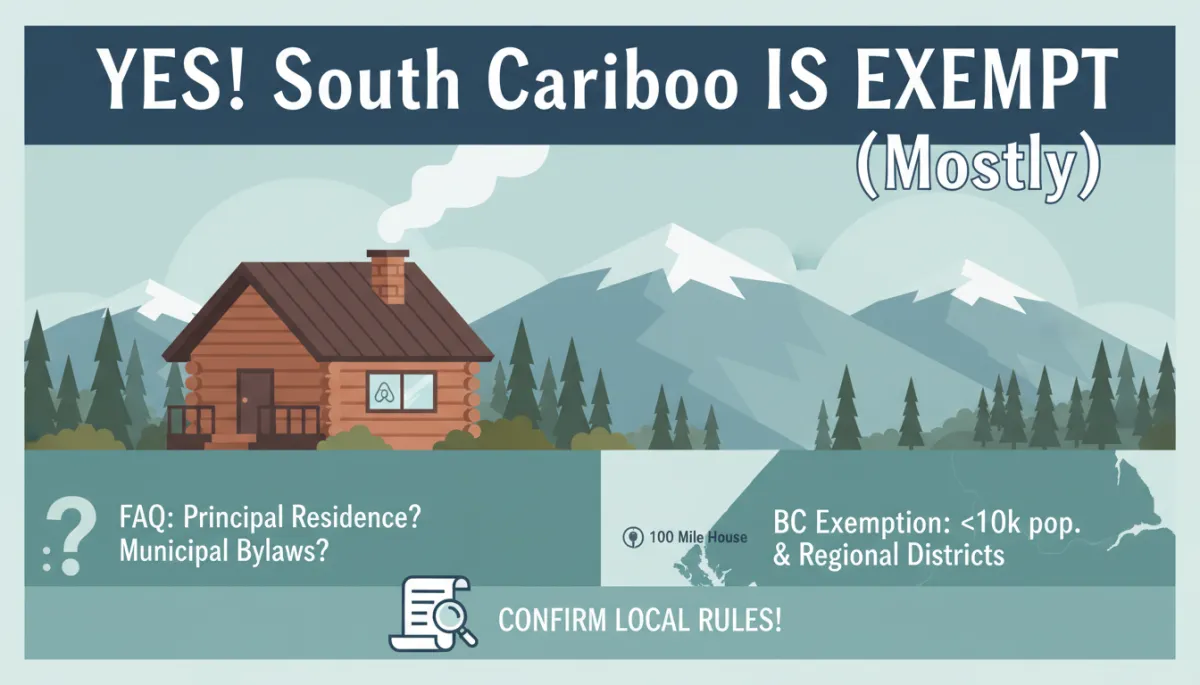
Under British Columbia’s Short‑Term Rental Accommodations Act, many areas of the Cariboo are treated differently from big tourism centres like Vancouver or Kelowna. The province’s principal‑residence requirement mainly targets larger, high‑pressure housing markets. It generally does not automatically apply to smaller communities and most regional district electoral areas—but you must still follow local zoning and business‑licensing rules.
As of mid‑2026, provincial documents indicate that: 100 Mile House is exempt from the provincial principal‑residence requirement and allows short‑term rentals as an accessory use under its own zoning bylaw, if you are licensed and meet local conditions [BC STR principal residence], [Zoning Bylaw No. 1466]. However, you must confirm the current exemption status for both 100 Mile House and the Cariboo Regional District directly with the Province of BC and local planning staff before relying on this information or publishing it, because communities can opt in or out each year and bylaws are changing quickly.
📌 Key Takeaway: In South Cariboo, provincial rules, municipal bylaws, and Cariboo Regional District zoning all stack together. Being exempt from the principal‑residence requirement does not mean you can ignore local zoning or licensing.
1. Airbnb Rules in BC’s Cariboo Region: The Big Picture
Across the Cariboo whether you’re near 100 Mile House, Lac La Hache, or on a more remote lake the rules for Airbnb‑style hosting come from two levels of government:
Province of BC: Sets the Short‑Term Rental Accommodations Act, including registration, enforcement, and the principal‑residence requirement [BC STR Regulation].
Local governments: The District of 100 Mile House and the Cariboo Regional District (CRD) decide where short‑term rentals are permitted, what “short‑term” means locally, and whether you can use cabins or only rooms in your home.
For most cabin owners, the crucial question is: is my property inside the District of 100 Mile House, or in a CRD electoral area (rural South Cariboo)? The answer changes which Airbnb rules apply to you.
2. BC’s Principal-Residence Requirement And Who Is Exempt
Province‑wide, BC has introduced a principal‑residence requirement for many short‑term rentals. Where it applies, you can usually only rent:
Your principal residence (the home you ordinarily live in), and
At most one secondary suite or accessory dwelling unit on the same property [BC principal residence rules].
However, BC also carves out important exemptions. The principal‑residence requirement does not automatically apply to:
Municipalities under 10,000 people that are not within 15 km of a larger municipality, unless they choose to opt in; and
Most regional district electoral areas (the rural areas outside municipal boundaries).
These exemptions matter across the Cariboo because many communities are small and rural. They mean that in many South Cariboo locations, the province is not forcing you to use only your principal residence for short‑term rentals but local zoning may still be stricter than the province.
💡 Pro Tip: Always check BC’s online short‑term rental map to see whether the principal‑residence requirement applies to your exact address, then confirm directly with the Province before you rely on an exemption.
3. Short-Term Rental Rules in 100 Mile House (Inside Town)
If your property is inside the District of 100 Mile House, you are under that municipality’s zoning and business‑licensing rules, as well as provincial law. The updated Zoning Bylaw No. 1466 (2026) allows short‑term rentals in a controlled way [Zoning Bylaw 1466].
Accessory use only: Short‑term rentals are permitted as an accessory use within a single‑detached dwelling or individual sleeping rooms in that dwelling so you can’t simply convert any building to a stand‑alone motel‑style operation.
Municipal business licence required: You must hold a valid licence from the District to operate a short‑term rental.
Parking: At least one on‑site parking space must be provided on the same property for guests.
Stay limit: No guest may stay more than 30 days per calendar year in the same dwelling, keeping the use truly “short term.”
Occupancy permit: The house must have a valid building permit for residential occupancy.
The bylaw also includes a bed and breakfast category, which is similar but typically limited to two guest bedrooms and up to four patrons at one time, with the same 30‑day maximum stay. B&Bs must operate within the principal dwelling.
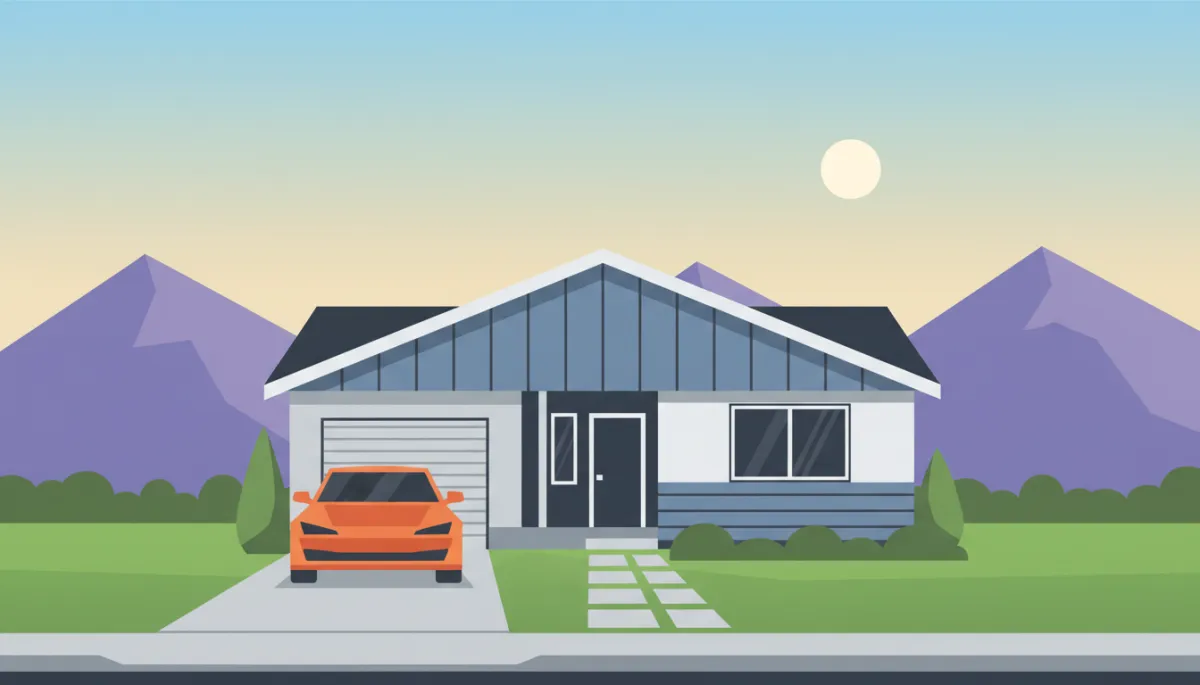
100 Mile House allows licensed short-term rentals as an accessory use with on-site parking.
4. Cariboo Regional District Cabins and Lake Properties (Outside Town)
Many popular “Airbnb cabins” in the South Cariboo are not in town at all they sit in Cariboo Regional District (CRD) electoral areas around lakes and rural roads. Here, a different set of municipal bylaws applies, and they are often stricter than people expect.
In several South Cariboo planning areas, CRD documents explicitly state that they will not permit short‑term rental of residences for less than 30 days as visitor accommodation [South Cariboo OCP]. Instead, they may allow:
Rooming and boarding in your principal residence, often with a maximum of four guests and no separate cabins or guest houses; or
Short‑term lodging facilities but only in specific commercial zones (for example, a C1‑2 zone that allows up to 10 sleeping units per 0.36 ha) [CRD Land Use Bylaw].
In other words, many CRD residential zones do not allow you to simply list a stand‑alone lake cabin on Airbnb for stays under 30 days, even if the provincial principal‑residence requirement doesn’t apply to your area. Some owners explore Temporary Use Permits (TUPs), but in zones that clearly prohibit short‑term rentals, a TUP may not be issued at all.
5. Exemption Status: 100 Mile House and CRD Electoral Areas
Under BC’s framework, municipalities under 10,000 population not within 15 km of a larger municipality and most regional district electoral areas are exempt from the provincial principal‑residence requirement unless they choose to opt in[BC principal residence overview].
As of mid‑2026, provincial regulation schedules show that:
The District of 100 Mile House is listed among jurisdictions exempt from the principal‑residence requirement; and
CRD electoral areas around South Cariboo are treated as regional district areas, which the province generally exempts from the principal‑residence rule unless they have specifically opted in.
However, the Province updates these schedules and exemption lists regularly through regulation (for example, by Orders in Council). Before you publish or rely on any specific claim about 100 Mile House or CRD exemption status, you must confirm directly with:
The BC Housing and Tenancy / Short‑Term Rental Registry team, and
District of 100 Mile House and Cariboo Regional District planning staff.
⚠️ Warning: Provincial exemption from the principal‑residence rule does not “legalize” a short‑term rental that is prohibited by CRD zoning or a municipal bylaw. Both levels must allow the use.
6. Provincial Registration and Platform Obligations (Airbnb, VRBO, etc.)
Whether or not the principal‑residence requirement applies, most hosts in BC must still:
Register annually with the provincial Short‑Term Rental Registry (mandatory since May 1, 2025), paying the applicable fee [BC STR information for visitors].
Display the provincial registration number on every Airbnb‑style listing, along with any required municipal business licence number.
Update registration details within 14 days if ownership, contact information, or use changes.
Platforms such as Airbnb are legally required to remove listings that do not show a valid provincial registration number and, in some cases, cancel existing bookings for non‑compliant listings. Fines can apply to both hosts and platforms.
7. FAQ: Principal Residence, Municipal Bylaws, and South Cariboo Cabins
Does the principal-residence requirement apply to my South Cariboo cabin?
It depends where your cabin is. The principal‑residence requirement usually targets larger, high‑pressure housing markets. Municipalities under 10,000 people not within 15 km of a larger municipality and most regional district electoral areas are generally exempt, unless they choose to opt in. Many South Cariboo locations fall into these exempt categories, but you must:
Check BC’s interactive STR map and the current regulation schedules; and
Confirm with the Province and local government before relying on any exemption.
If my area is exempt, can I Airbnb a second home with no restrictions?
No. Exemption from the provincial principal‑residence rule only means the province is not limiting you to your main home. You still must obey municipal or CRD bylaws. In much of the Cariboo Regional District, those bylaws either:
Do not permit short‑term rentals of whole homes under 30 days in residential zones; or
Only allow limited rooming/boarding in your principal residence, with guest and bedroom caps.
What municipal bylaws should I check for a short-term rental in 100 Mile House?
For a short‑term rental in 100 Mile House, you should review:
The Zoning Bylaw No. 1466 to confirm that your property’s zone permits short‑term rental as an accessory use;
The business licence bylaw and any STR‑specific policies; and
Any parking, noise, or nuisance bylaws that might affect guest stays.
Are most Cariboo Regional District electoral areas more flexible than towns?
Not necessarily. While most regional district electoral areas are exempt from the provincial principal‑residence rule, CRD zoning can be more restrictive than municipal zoning. In some South Cariboo OCP areas, CRD policy is to discourage or prohibit short‑term rentals of residential homes under 30 days, steering visitor accommodation into commercial zones or tightly controlled rooming/boarding setups.
My cabin is seasonal and not winterized. Does that change anything?
BC’s regulations include an exemption for some seasonal properties not equipped for year‑round residence. In specific cases, those properties may be exempt from both registration and the principal‑residence requirement [BC STR Regulation]. Whether your particular cabin qualifies is a technical question you should confirm with the provincial registry and CRD planning staff, as local zoning must still allow the use.
8. Practical Next Steps Before You List Your Cabin
Pinpoint your jurisdiction: Confirm whether your property is inside 100 Mile House or in a specific CRD electoral area (e.g., South Cariboo).
Check zoning and OCP policies: Use the CRD bylaw directory and mapping tools—or call planning staff to see if short‑term rentals, rooming/boarding, or short‑term lodging facilities are permitted in your zone.
Confirm provincial exemption and registration requirements: Use BC’s STR map and speak with the provincial registry to verify whether the principal‑residence requirement and registration apply to your property type and location.
Apply for licences and permits: Obtain a municipal business licence (for 100 Mile House) or any required CRD approvals, and then register with the provincial STR registry if required.
Set house rules that reflect local bylaws: Include parking limits, quiet hours, and maximum guest numbers to keep neighbours and bylaw officers onside.
Final Word: Airbnb in South Cariboo Is Possible but Not Anywhere, Any Way
South Cariboo’s lakes and forests make it a natural fit for short‑term rentals, but the rules are layered. Airbnb rules in BC’s Cariboo combine provincial registration, a principal‑residence framework that may or may not apply to you, and often‑strict municipal bylaws especially in the Cariboo Regional District’s rural areas. Inside 100 Mile House, short‑term rentals are allowed as a licensed accessory use with clear conditions. Outside town, many CRD zones still treat under‑30‑day rentals of homes as something to restrict or avoid.
Before you invest in a “future Airbnb cabin” or hit publish on a listing, take the time to verify exemption status, principal‑residence rules, and local bylaws with both the Province of BC and local planning staff. A short phone call now can save you from fines, forced cancellations, or a rental business you’re not legally allowed to operate later.