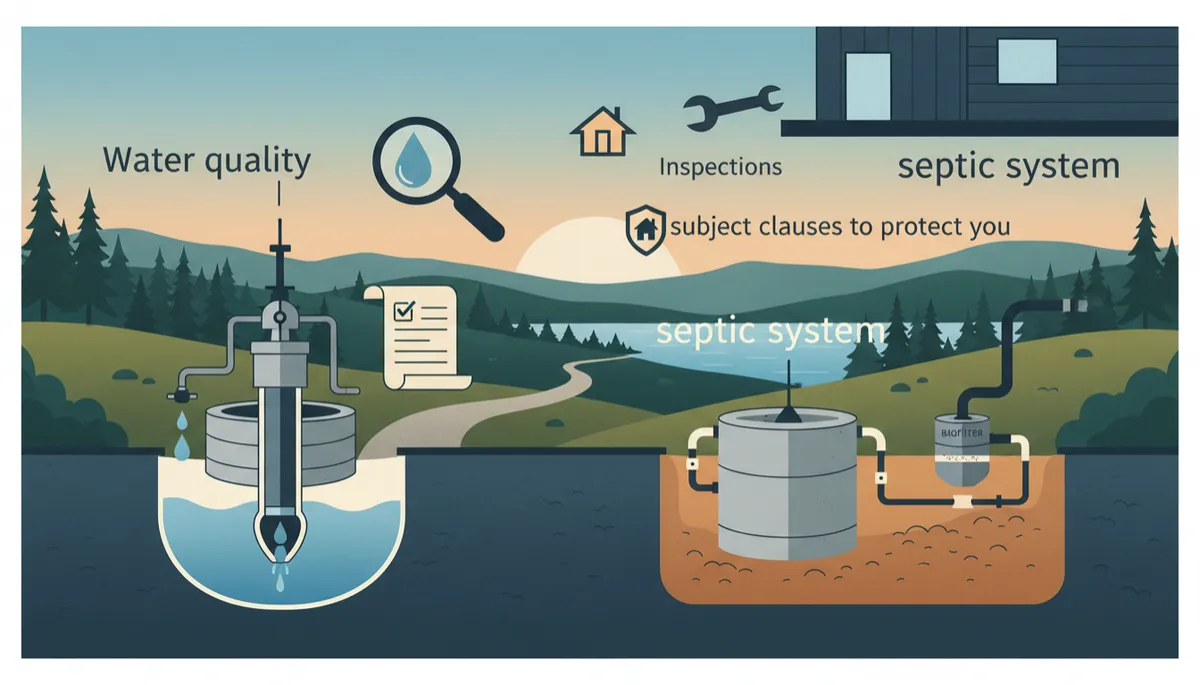
Wells & Septic Guide for Rural BC Buyers
Rural Real Estate, Wells, Septic, British Columbia
Wells & Septic 101 for Rural BC Buyers: Inspections, Testing & Red Flags
Moving from city water and sewer to a rural BC acreage is exciting—but for many first-time rural buyers, private wells and septic systems are the single biggest unknown. This guide walks you through how they work, what inspections and tests you need, common red flags, how to protect yourself with subject clauses, and realistic costs to budget for. You can also download Amanda’s rural buyer checklist and explore the Bridge Lake Acreage post and Buyers page for even more detail tailored to BC’s Cariboo and Interior markets.
City Services vs. Rural Systems: What Changes When You Buy Acreage?
In most BC cities and larger towns, you simply pay your municipal bill and never think about where your water comes from or where wastewater goes. On a rural property, you (not the municipality) are effectively the utility company. Your home’s water supply usually comes from a private well, and wastewater is handled by an on-site septic system. If either system fails, you’re the one paying for repairs or replacement—so understanding them before you remove subjects is crucial.
How Private Wells Work on Rural BC Properties
Most rural BC homes use a drilled well. A licensed driller has bored a narrow hole down to an underground aquifer, installed casing (a pipe lining the hole), and set a submersible pump that pushes water up to the house. The water travels through buried lines to a pressure tank, which stores water and keeps pressure steady so taps, showers, and appliances work normally. Some older or shallow systems may use dug or bored wells, which can be more vulnerable to contamination or seasonal changes in water level.
In BC, many wells are registered, and you can sometimes look up basic information like depth and reported flow. However, paper records and online databases never replace current, on-site testing. Aquifers can change over time, nearby development can affect water levels, and pumps and pressure systems wear out. As a buyer, you want to confirm two basics: Is there enough water? and Is it safe to drink?
Flow Testing: Will the Well Keep Up With Your Daily Life?
A flow test measures how much water the well can reliably produce over time. For a typical family home, you want to see that the well can deliver a steady rate (often measured in gallons per minute or litres per minute) without the water level dropping too quickly. In practice, a professional will run the water continuously for a set period and monitor both the rate and how quickly the well recovers when pumping stops.
Buyers new to rural properties often focus only on drinking water, but flow affects everything: showers, laundry, dishwashers, gardening, even fire protection in some cases. If you dream of animals, irrigated gardens, or adding a rental cabin in the future, you’ll want a comfortable margin above basic household needs. Amanda’s rural buyer checklist includes a simple section where you can note the tested flow rate, date, and who performed the test so you’re not relying on casual seller comments like “We’ve never run out.”
Water-Quality Testing: Is the Water Safe to Drink?
Flow is only half the story. You also need to know what’s in the water. A basic potability test checks for bacteria such as total coliforms and E. coli, which can indicate contamination from surface water, animals, or septic effluent. Many buyers also choose a more complete panel that looks at minerals, hardness, metals (like arsenic or lead), and aesthetic issues such as sulphur smell or staining from iron and manganese. In some BC regions, naturally occurring minerals are common and may require treatment even if the water is technically safe to drink.
In most cases, your offer should be conditional on receiving satisfactory water test results from a recognized lab, not just a quick in-home strip test. If the property already has filtration or UV treatment, have the system inspected as well: filters, lamps, and softeners all have ongoing maintenance costs. On Amanda’s Buyers page you’ll find links and guidance on arranging water testing in rural BC communities, plus how to interpret the reports without getting overwhelmed by numbers.
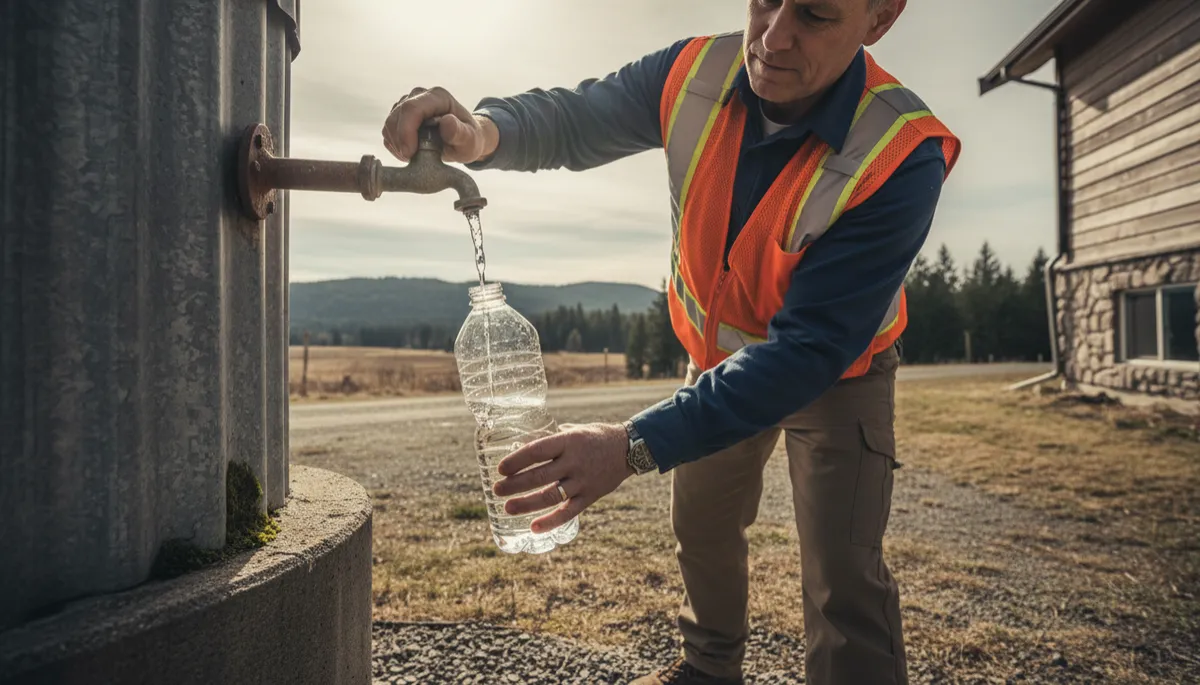
Independent flow and water-quality testing give you hard facts before you remove subjects.
How Septic Systems Work: From Your Drains to the Drain Field
A conventional septic system has two main parts: the septic tank and the disposal field (also called a drain field or leach field). All wastewater from toilets, sinks, showers, and laundry flows into the buried tank. Inside, solids settle to the bottom as sludge, fats and oils float to the top as scum, and relatively clear effluent in the middle flows out to the drain field. There, it slowly percolates through gravel and soil, where natural bacteria finish the treatment process before the water returns to the ground.
Modern BC systems are designed and installed by registered practitioners under provincial regulations, but many older rural homes pre-date current standards. You may encounter steel tanks (prone to rusting out), homemade systems, or undocumented modifications. That’s why a thorough septic inspection and pump-out is so important—it’s your window into what’s happening underground. The Bridge Lake Acreage post on Amanda’s site includes a real-life example of how a proper septic review influenced negotiations and long-term planning on a Cariboo-area property.
Septic Inspection & Pump-Out: What Should Happen Before You Buy
A standard home inspection is not enough. You’ll want a qualified septic professional to:
Locate the tank, distribution box, and drain field, confirming size and layout relative to the house, well, and property lines.
Open the tank, measure sludge and scum levels, and check baffles, lids, and structural condition.
Arrange a pump-out so the interior of the tank can be properly inspected for cracks, corrosion, or root intrusion.
Evaluate how the drain field is performing—looking for ponding, soggy areas, or effluent at the surface.
A pump-out is not just maintenance; it’s part of due diligence. If a tank hasn’t been pumped in many years, it may be overloaded with solids, which can shorten the life of the drain field. Your inspector’s written report becomes a powerful tool in renegotiating price or asking the seller to address issues before completion. Amanda’s rural buyer checklist includes a section to record the inspection date, company, and key findings so you have a clear paper trail for future service providers and resale.
Red Flags to Watch For With Wells and Septic Systems
While only professionals can fully evaluate these systems, there are warning signs you can spot as a buyer doing an initial walk-through or reviewing disclosures:
Strong odours near the drain field, tank area, or around the house—especially sewage or “rotten egg” smells.
Soggy or unusually green patches in the yard where the drain field likely sits, indicating surfacing effluent.
Slow drains, gurgling toilets, or backups inside the home, which may point to septic or plumbing issues.
Unknown system age or missing permits, especially on older cabins and hobby farms with DIY additions.
Well located too close to septic components, ditches, or animal areas, raising contamination concerns.
Seller reluctance to allow testing, pump-outs, or access to service records.
None of these automatically mean you should walk away, but they do mean you should proceed carefully, get expert advice, and possibly adjust your offer. In the Bridge Lake Acreage example, early attention to subtle red flags allowed the buyers to plan for upgrades instead of being surprised after move-in.
Subject Clauses That Protect Rural Buyers in BC
In BC, your best protection as a rural buyer comes from well-drafted subject clauses in the Contract of Purchase and Sale. These give you time to complete inspections and walk away—or renegotiate—if results are unsatisfactory. Common protective subjects around wells and septic include:
Subject to the buyer receiving, at the buyer’s expense, satisfactory well flow and potability tests by a qualified professional by a specific date.
Subject to the buyer obtaining, at the buyer’s expense, a septic inspection and pump-out report from a licensed contractor, at the seller’s cost for the pump-out if negotiated.
Subject to the buyer’s satisfaction with all available records relating to the installation, permits, and servicing of the well and septic system.
Your agent and, where appropriate, your lawyer or notary can help tailor these clauses to your situation and local norms. Amanda’s Buyers page includes examples of subject wording and explains how much time to allow for inspections in different markets, so you’re not rushed into removing subjects before you have the information you need.
Costs to Budget For: Testing, Maintenance & Potential Upgrades
Understanding the likely costs around wells and septic systems helps you budget realistically and avoid buyer’s remorse. Amounts vary by region and contractor, but for many rural BC properties you can roughly expect:
Well flow and potability testing: A few hundred dollars for professional testing and lab fees, depending on the scope of analysis.
Septic inspection and pump-out: Often several hundred dollars for a standard residential system; more if access is difficult or the system is large.
Ongoing maintenance: Pumping the septic tank every 3–5 years, filter changes, UV lamp replacements, and occasional well or pump servicing.
Water treatment equipment: Softeners, iron filters, or UV systems can range from modest under-sink units to more significant whole-house installations, plus annual upkeep.
Major replacements: A new drilled well or a fully redesigned septic system can reach into the tens of thousands of dollars, depending on site conditions and design requirements.
While big-ticket failures are rare when systems are properly designed and maintained, they do happen—and they can be financially painful if you’ve stretched your budget to the absolute limit. Amanda’s rural buyer checklist includes a budgeting section that prompts you to set aside a contingency amount for well and septic work over the first few years of ownership, especially if the systems are older or near end-of-life.
Putting It All Together: Confident Rural Buying in BC
Wells and septic systems don’t need to be scary—they just require a different mindset than city services. Instead of assuming someone else is looking after things, you become an informed owner who understands how your systems work, what routine care they need, and when to call in professionals. By insisting on proper flow and water-quality testing, arranging a thorough septic inspection and pump-out, watching for red flags, and using strong subject clauses, you dramatically reduce the risk of unwelcome surprises after you move in.
If you’re considering a property similar to the Bridge Lake Acreage or another rural home in BC’s Interior, start by downloading Amanda’s rural buyer checklist. Use it alongside the resources on her Buyers page to keep track of tests, reports, and questions for your inspector and agent. With the right preparation, you can enjoy starry nights, quiet mornings, and wide-open space—confident that the invisible infrastructure beneath your feet is working the way it should.