Wildfire Home Insurance Guide for Cariboo Buyers
Real Estate, Wildfire Readiness, Home Insurance, Cariboo, 100 Mile House
Buyer Guide to Wildfire Home Insurance in the Cariboo
A calm, practical look at wildfire risk, FireSmart home choices, and insuring rural Cariboo and 100 Mile House properties in late winter and spring.
Why wildfire and insurance questions come up so often
If you are buying or owning a home in the Cariboo, especially around 100 Mile House, wildfire is simply part of the landscape. Provincial outlooks for 2026 point to warmer, drier-than-normal summers and elevated fire danger across the Interior, including the Cariboo and 100 Mile House area, with peak activity expected in July and August (BC Wildfire Service seasonal outlooks). That reality naturally leads buyers and owners to ask careful questions about wildfire readiness and home insurance long before the smoke ever appears on the horizon.
Insurers look closely at wildfire exposure, distance to fire protection, and how prepared a property is. At the same time, out-of-area buyers are often unfamiliar with how rural BC insurance works, what is considered an insurable property, and what FireSmart BC actually expects around the home. This guide is designed to walk you through those topics in a calm, step-by-step way, so you can make decisions with a clear head rather than in a rush during fire season.
Common questions from out-of-area buyers and owners
Will I be able to get home insurance at all on a rural Cariboo property?
How does wildfire risk in 100 Mile House affect premiums and coverage?
What does “within a fire protection area” or “distance to hall” really mean for insurance?
What does FireSmart actually look like around a home, and does it matter to insurers?
When should I get quotes before or after subjects come off?
These are all reasonable questions. The short answer is that wildfire coverage is still a standard part of most home policies in BC, including rural areas, but the details matter: location, construction, heating systems, and how FireSmart your property is can all influence whether a home is easily insurable and at what cost (see BC PreparedBC insurance guidance and rural insurance overviews).
Understanding wildfire risk in 100 Mile House and the Cariboo
The 100 Mile House area sits in the Interior Douglas-fir dry-cool zone. The community’s 2026 Community Wildfire Resiliency Plan notes that there are few natural barriers to fire spread, and that fires can travel from considerable distances before reaching town. Recent seasons have brought “High” fire danger ratings at times, underscoring that wildfire is an ongoing, not theoretical, risk for local homes (FireRadar and CWRP data).
Rather than being alarmed by this, it is helpful to view it as a design and planning factor. Many successful, long-standing homes in the Cariboo have managed this risk through thoughtful siting, FireSmart landscaping, and practical emergency planning. Insurers are increasingly aware of these measures, and some may even recognize mitigation work with more favourable terms or discounts when it is documented clearly.
FireSmart BC basics around the home
FireSmart BC’s “Begins With You” guide provides a clear, homeowner-friendly checklist. Around a Cariboo home, some of the most practical steps include:
Keeping the first 1.5 metres around the house non-combustible gravel, pavers, or bare soil rather than bark mulch or dense shrubs.
Storing firewood, propane tanks, and other combustibles at least 10 metres away from structures, not under decks or against siding.
Mowing grass to under 10 cm and keeping it well-watered in spring and early summer as conditions allow.
Pruning tree branches up at least 2 metres from the ground to reduce “ladder fuels.”
Cleaning gutters and roofs so they are free of needles, cones, and leaves that can catch wind-blown embers.
These steps do not guarantee a particular insurance outcome, but they do demonstrate that a property is being maintained with wildfire in mind. When buyers ask whether a place is “FireSmart,” they are really asking if the home has a reasonable chance of withstanding ember showers and surface fire—conditions that have been studied extensively by FireSmart BC and the BC Wildfire Service, with clear evidence that prepared homes fare better even in extreme seasons.
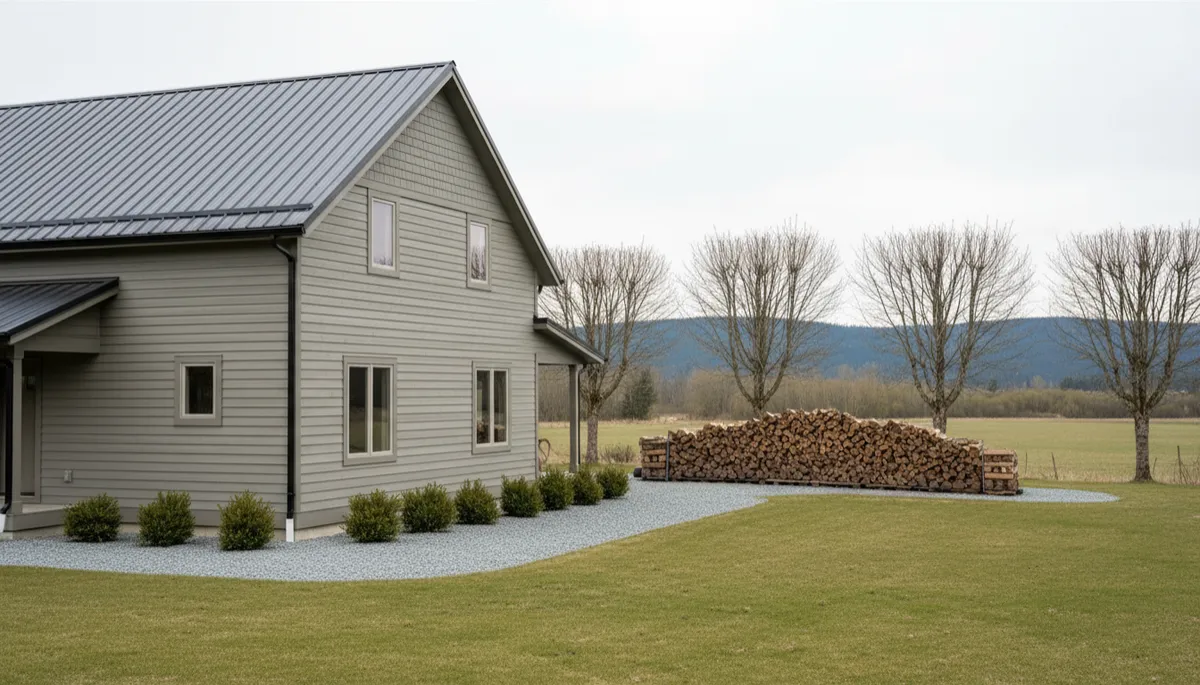
Simple FireSmart steps around the home can improve resilience and support insurability.
Fire protection areas and distance to hall: why they matter
One of the first things insurers look at for rural BC properties is whether the home lies within a recognized fire protection area and how far it is from the nearest fire hall. In simple terms, a home close to a staffed hall with hydrants or reliable water supply generally presents a lower risk than one far up a forest service road with limited access and no local fire service. That difference can affect both premiums and whether a given insurer will write a policy at all.
Around 100 Mile House, some neighbourhoods are clearly within established protection districts, while others are served by volunteer departments or may sit outside any official coverage area. When you are looking at listings, it is worth asking early on: which fire hall responds here, and approximately how far is the drive? Your insurance broker will often use that distance, along with road access and water sources, to determine how the property is rated from a fire protection standpoint.
Insurance for rural BC properties: what buyers need to know
Standard home policies in BC typically include wildfire as a covered peril, even in rural areas. Where rural Cariboo homes differ from city properties is in cost and conditions. Premiums may be higher due to wildfire exposure and limited fire protection, and insurers may ask more detailed questions about building materials, access, water supply, and heating systems (as noted in provincial emergency management and rural insurance resources).
If the property includes acreage, a shop, or small-scale agricultural activity, your broker may classify it as an acreage, hobby farm, or full farm. Each category has its own coverage structure. A purely residential acreage is usually insured on a regular home policy. Once you add income-generating livestock, crops, or boarding, you may need a hobby farm endorsement or dedicated farm policy, which can run from roughly $1,200 to $4,500 per year depending on scale and coverage. Clarifying intended use up front avoids surprises later in the process.
Talking to Amanda about insurable properties and heating systems
When you are working with Amanda on a purchase or considering a sale, it is helpful to treat “insurability” as a core part of your due diligence, right alongside septic, water, and title review. Amanda can often flag early whether a property’s location, construction, or heating systems are likely to pose challenges for insurers and can suggest when to bring an experienced rural broker into the conversation.
Heating is a particular focus on both the buyers’ information pages and insurance applications. Many Cariboo homes use a mix of systems: wood stoves, pellet stoves, propane, electric baseboards, or high-efficiency furnaces. Insurers will ask whether wood appliances are WETT-inspected, how often chimneys are cleaned, and whether any older oil tanks are present. If you are reviewing Amanda’s heating posts, look for up-to-date inspections, permits for installations, and clear separation between heating appliances and combustibles. Well-documented, properly installed systems are easier to insure and easier to explain to an underwriter if questions arise.
Getting insurance quotes before subjects come off
In an active wildfire season, insurers sometimes place temporary restrictions on writing new policies in areas under threat. Even outside those windows, rural homes can take longer to underwrite because of the extra information required. For that reason, it is wise to start the insurance conversation as soon as you have an accepted offer, not the week before closing. In many cases, you will want a specific subject in your contract that allows you to confirm satisfactory insurance before you remove conditions.
Practically, that means sharing the full civic address, photos, and details about heating, water, and any outbuildings with your broker early. Ask them directly: are there any wildfire-related restrictions right now, and do you foresee any issues binding coverage on this property? Getting a written quote or confirmation before subjects come off will give you much more confidence, particularly if you are purchasing from out of town and cannot easily pivot to another property if insurance proves difficult.
Owner preparation each late winter and spring
Late winter and early spring in the Cariboo are ideal times to quietly prepare for the coming fire season. Snow is receding, crews are less stretched, and you can see where needles, branches, and debris have collected over the winter. A calm seasonal routine might include:
Walking your property with a FireSmart checklist and noting simple tasks: moving firewood, trimming branches, raking up dry grass near buildings.
Booking chimney cleaning and inspections for wood or pellet appliances, and keeping receipts for your records and for insurers if requested.
Checking hoses, pumps, and outdoor taps so that basic water access is ready if you need it for spot-wetting around structures during a smoky period, when safe and advised to do so.
Reviewing your insurance policy to confirm coverage limits, deductibles, and any wildfire-related conditions before the season heats up.
None of these tasks are dramatic, but together they create a property that is better prepared and easier to insure. They also give you a sense of control in a season that can sometimes feel unpredictable, especially if you are new to the region and still learning how local fires behave.
Pulling it together: a calm approach to buying and owning in the Cariboo
Wildfire risk in 100 Mile House and the broader Cariboo is real, but so is the capacity of well-prepared homes and communities to live with that risk. FireSmart BC provides clear, practical guidance; the District’s FireSmart program and Community Wildfire Resiliency Plan add local context; and experienced rural insurance brokers can help you navigate coverage options tailored to your specific property and heating systems. Throughout, Amanda can act as a steady point of contact, helping you identify insurable properties and encouraging you to secure quotes before subjects come off, rather than after.
Whether you are reading this on a buyers’ resource page in late winter or standing on a Cariboo acreage in early spring, the goal is the same: understand the wildfire context, ask thoughtful insurance questions, and take manageable steps each year to keep your home, and your peace of mind, as secure as possible.